What’s New?

ACNJ Testimony to Senate Education Committee on Bill S4476

Posted on June 23, 2025


Winifred Head Shot2

Winifred Smith-Jenkins
Director of Early Learning Policy and Advocacy

Bill S4476 permits awarding of contracts for certain preschool education services by resolution of board of education; extends maximum length of preschool education services contracts to three years. Identical Bill Number: A5780

To: Senate Education Committee

From: Advocates for Children of New Jersey (ACNJ)

Date: May 12, 2025

RE: ACNJ’s Testimony on S4476

Dear Chairman Gopal and Members of the Senate Education Committee:

My name is Winifred Smith-Jenkins, and I serve as the Director of Early Childhood Policy and Advocacy at Advocates for Children of New Jersey. Thank you for the opportunity to testify in strong support of Senate Bill 4476.

This bill is a critical next step. It removes a significant bureaucratic barrier that hinders the expansion of high-quality preschool in New Jersey. ACNJ has long supported a mixed delivery system—one that includes community-based providers as essential partners in delivering early childhood education. S4476 helps advance that goal by simplifying the contracting process and extending contract terms to three years.

Importantly, multi-year contracts give providers something they’ve long needed—stability. When a provider has a contract that goes beyond a single year, it becomes a tool they can take to the bank to secure a loan, make much-needed infrastructure upgrades, purchase furnishings, and invest in high-quality classroom materials. It helps them manage the shortfalls that often come in June, when only a partial payment might arrive, but all their bills—staff salaries, rent, utilities—are still due.

This bill provides assurances that were once missing. It brings peace of mind, helping providers plan and grow confidently, knowing the partnership with their local school district isn’t just a one-year experiment, but a long-term commitment to our youngest learners.

We urge your support for S4476. Let’s give providers the foundation they need to deliver strong, stable preschool programs for New Jersey’s children.

Thank you.

Child Care in New Jersey: Why Everyone Should Care

Posted on June 23, 2025

Child Care is Everyone's Business

winifred headshot
Winifred Smith-Jenkins
Director of Early Childhood Policy and Advocacy

For more information on this topic, contact Winifred at wsmith-jenkins@acnj.org.

Child care is not just a concern for families with young children–it’s everyone’s concern. Every child deserves a strong start in life. Every parent deserves the opportunity to work, go to school, and build a stable future knowing their child is being cared for in a safe and nurturing environment. But in New Jersey, child care is out of reach for far too many families, and it's costing us all.

This election year, voters have the power to demand action. It’s time to ask: What’s your plan to provide safe and stable care for all our babies?

The Real Cost of Inaction
Inadequate child care isn’t just a burden on families. It’s a billion-dollar public economic challenge:

2025 election badge2

Let's make children and their
families the center of the
2025 Election Campaign.

  • Multiple studies have shown that high-quality child care for young children yields significant long-term economic benefits. New Jersey loses $3.6 billion every year in lost earnings, productivity, and tax revenue due to child care challenges (ReadyNation, 2023).
  • Without reliable child care, parents miss work. Businesses suffer absenteeism, lose workers, and lose their investments in worker training. The economy measurably suffers, and New Jersey is less prosperous. 
  • Parents who cannot work because of lack of child care place additional, costly burdens on the social welfare system.
  •  Without reliable high-quality child care children are less safe and miss out on early learning that prepares them for school and adult life as citizens and contributors to the state’s prosperity.

What Families in New Jersey Need
New Jersey families need leaders who will:

  • Expand access to affordable, high-quality child care.
  • Invest in the child care workforce so providers can stay open and staffed
  • Support family choice: from centers to in-home providers.
  • Ensure funds reach those who need them most.

What Are the Types of Child Care in New Jersey

  • State-funded preschool.
  • Free, full-day programs for 3- and 4-year-olds in participating districts.
  • Head Start and Early Head Start
    Comprehensive early learning and family support programs for low-income families, serving children from birth to age 5 and pregnant women.
  • Child Care Centers
    Licensed care for six or more children, typically offering structured learning environments for infants through school-aged children.
  • Family Child Care (Home-Based)
    Small group care in a provider’s home. Some are registered and subsidy-eligible; others operate privately.
  • In-Home and Family, Friend, Neighbor (FFN) Care
    Trusted individuals who provide care in the child’s home or their own. Some may be eligible for subsidies under specific requirements.
  • Summer Youth Camps
    Seasonal care for school-aged children. Certified camps may qualify for subsidies.

Why Should Everyone Care?
Consider the impact on:

  • Children
    • Builds early brain development, social-emotional skills, and school readiness.
    • Lays the foundation for lifelong success.
  • Parents
    • Supports participation in the workforce or higher education.
    • Reduces stress and supports family well-being.
  • Grandparents
    • Allows older adults raising or helping raise grandchildren to pursue their own personal, health, or financial goals.
  • Employers
    • Increases employee retention, reduces absenteeism, and improves productivity.
    • Strengthens the local workforce.
  • Community and Economy
    • Reduces future costs for education, health, and social services.
    • Builds a stronger, more inclusive economy by supporting working families
      Ensures all children, regardless of background, have a chance to thrive.

Why Public Investment Matters Now

  • High-quality child care is too expensive for most families and unsustainable for most providers. 
  • On average, most centers in NJ operate around 70% of their licensed capacity. Many programs are operating below capacity due to workforce shortages and underfunding.
  • New Jersey loses $3.6 billion every year in lost earnings, productivity, and revenue due to the lack of accessible child care (ReadyNation, 2023).
  • Without public investment, parents, providers, and the economy will continue to suffer.

What You Can Do

  • Partner with us and engage with candidates. 
  • Ask candidates:
    “What is your plan to expand access to affordable, quality child care in New Jersey?”
  • Share your story to help others understand what’s at stake. Use #NJVotes4Kids on social media to join the conversation on making children’s issues a priority in the state elections.
  • Support public funding for child care as part of a thriving, equitable New Jersey.

Need help finding child care or applying for financial assistance?
Visit www.ChildCareNJ.gov or call 1-800-332-9227.

The Missing Curriculum: Why Social Emotional Character Development (SECD) Matters

Posted on June 19, 2025

Screenshot

Authored by:
Adriana Bland
Deborah T. Poritz Summer Public Interest Legal Fellowship Program, LSNJ

For more information on positive youth development efforts, contact Isaiah Fudge at Ifudge@acnj.org.

Social Emotional Character Development is a Whole-Child Approach to Youth Success

Social Emotional Character Development (SECD) is a whole-child approach designed to help youth form strong, healthy relationships, manage emotions effectively, and develop the necessary skills to thrive in life. Rather than cultivating entirely new skills, SECD extracts and strengthens the emotional and interpersonal skills that youth already possess, helping them navigate their positive life purpose with confidence, compassion, and control. Key competencies such as emotional awareness, self-regulation, and collaboration are at the heart of SECD. Encouraging and inspiring these abilities not only supports youth in academic success, but also empowers them to make thoughtful and positive choices about their futures. Without this clear sense of purpose, many youth make poor decisions that can have lasting negative effects. This is why SECD is so critical–it builds resilience and emotional well-being.

2025 election badge2

Let's make children and their
families the center of the
2025 Election Campaign.

Maurice Elias quote

SECD is a powerful strategy for youth success but, it is important to understand that this method is not a one-size-fits-all solution. Each youth is unique. As such, the approaches used must be flexible and meet youth where they are.

Watch our Lunch and Learn on Social Emotional Learning featuring Dr. Maurice Elias, Professor of Psychology and Director of The Collaborative, Rutgers Center for Community-Based Research, Service, and Public Scholarship

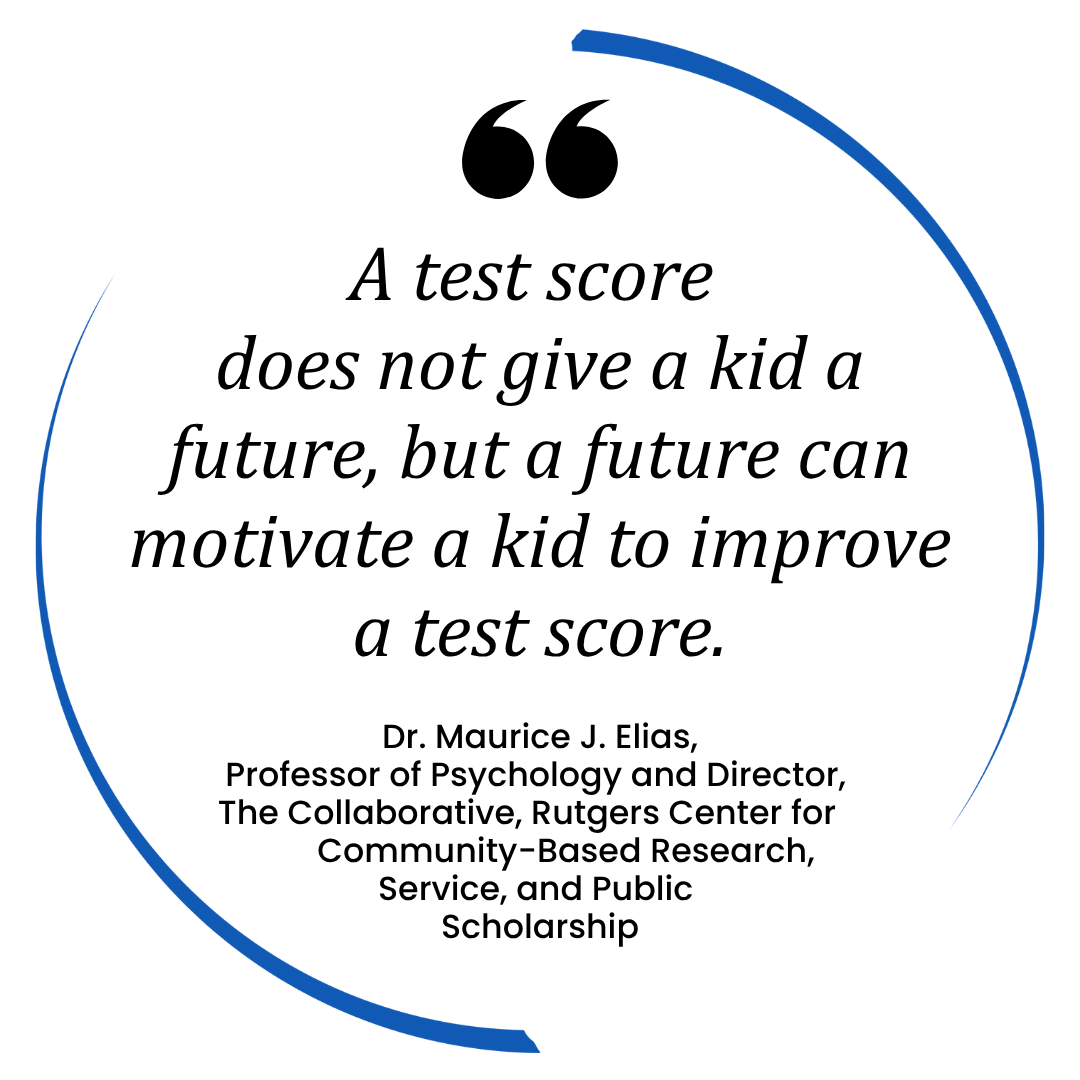
While academic achievement often takes center stage in youth development, social and emotional skills are embedded in everything we do, further underscoring the need to incorporate SECD before problems arise, not after. As Dr. Maurice J. Elias notes in his recent Lunch & Learn Webinar, “A test score does not give a kid a future, but a future can motivate a kid to improve a test score.” By prioritizing SECD, we are not just equipping young people for academic success, we are preparing them for life. 

SECD Key Takeaways: 

  • Success in school and life is dependent on healthy social and emotional development.
  • Strong relationships with trustworthy adults can aid in young people’s development of important skills.  
  • A unified SECD approach addresses five core competencies in young people: self-awareness, self-management, responsible decision-making, relationship skills, and social awareness.
  • While SECD programs exist, adults often do not have adequate training to effectively lead and maintain them.
  • Social emotional character development often begins at home, where its influence is both earliest and strongest.
  • Mental health depends largely on one’s social emotional competencies. 
  • It does take a village to raise a child. 

Why Maternal and Infant Health Must Be a Top Priority for New Jersey’s Next Governor

Posted on June 16, 2025

Our Families Deserve Better. Our Future Depends on it.

Co-authored by:

winifred headshot
Winifred Smith-Jenkins
Director of Early Childhood Policy and Advocacy
alena-siddiqui
Alena Siddiqui
Data Analyst

For more information on this topic, contact Winifred at wsmith-jenkins@acnj.org.

New Jersey is facing a maternal health crisis–one that is hitting Black mothers and babies the hardest. Many of these tragedies are preventable. In fact, according to the CDC, three in five pregnancy-related deaths could be prevented. New Jersey’s own data underscores this reality. Between 2016 and 2018, there were 44 pregnancy-related deaths in the state, and over 90% were deemed preventable by the New Jersey Maternal Mortality Review Committee. Our next governor must take action!

From our nation’s earliest days, the health and care of pregnant women and their infants have reflected deep inequalities. Historically, white women in early America often received rest and care during pregnancy and childbirth, while enslaved Black women were forced to keep working through pregnancy, labor, and postpartum recovery. Their health and lives, along with the lives of their children, were disregarded, setting the stage for disparities that persist even now. 

2025 election badge2

Let's make children and their
families the center of the
2025 Election Campaign.

The legacy of unequal care continues to shape worse health outcomes for Black mothers and babies today.

In New Jersey, Black mothers are 18 times more likely to suffer from heavy bleeding after giving birth, known as postpartum hemorrhage. They are also seven times more likely to die from pregnancy-related complications than white mothers. Black infants are more than two times as likely to die before their first birthday. These risks remain high regardless of income, education, or insurance status. The long-standing inequalities in our health care system are deeply rooted in systemic racism and unconscious bias and have significant consequences on how doctors treat women of color.

This is not just a health issue. It’s a human rights issue.

Many of these deaths are preventable. They happen because too many mothers are ignored when they voice pain, mistreated during labor, or denied the prenatal and postpartum care they need. Nationally, one in six women report mistreatment during childbirth, including being shouted at, ignored, or denied help. Black women report these experiences at even higher rates.

We cannot be silent.

Improving maternal and infant health is about restoring dignity, respect, and equity. It is about recognizing that maternal health care is essential health care, and ensuring every mother, regardless of race, zip code, or income, has access to the support, care, and compassion she needs to safely bring a child into the world.

New Jersey’s next governor must have a plan with input from those most impacted. 

In this election year, we urge every voter to ask the candidates:

  • What will you do to improve care for Black mothers and babies in New Jersey?
  • How will you ensure access to respectful, culturally sensitive prenatal and postpartum care?
  • Will you support midwives, doulas, and local programs that serve families?
  • What steps will you take to tackle the stress and life challenges—like racism, housing, and hunger—that affect maternal health?

Our state’s future depends on healthy beginnings. Let’s demand a future where all mothers and babies thrive.

Fewer Than 30% of New Jersey Paid Family Leave Claims for Newborn Bonding Are From Dads

Posted on June 13, 2025

Screenshot 2024-09-23 111139

By Naomi Engelhard Leontine Young Fellow

For more information on this topic, contact Diane Dellanno at ddellanno@acnj.org

Did You Know Blog Banner

Despite the fact that New Jersey’s Paid Family Leave Insurance (NJ FLI) program is generally available to both parents, fathers made up only 29.7% of bonding claimants in 2023. NJ FLI provides cash benefits to bond with a newborn, newly adopted or newly placed foster child, or to provide care for a seriously ill or injured family member. NJ’s program was signed into law in 2009 and has since been improved and expanded. As of 2019, eligible residents can take up to 12 consecutive weeks of Paid Family Leave, with a maximum benefit of 85% of wages (which is subject to a state-imposed cap).

Why Aren’t More Fathers Taking Advantage of Paid Family Leave?
Recent research highlights several barriers for fathers when considering parental leave, such as, external pressures from peers and employers, concern for career trajectory, and overall lack of awareness. Economic constraints were also among the obstacles fathers faced when considering taking leave. In New Jersey, while workers can receive up to 85% of their average weekly wage, the actual amount they receive is limited by a maximum benefit amount  imposed by the state. This means that if an expectant parent's average weekly wage exceeds a certain threshold, they will only receive the maximum allowable benefit.

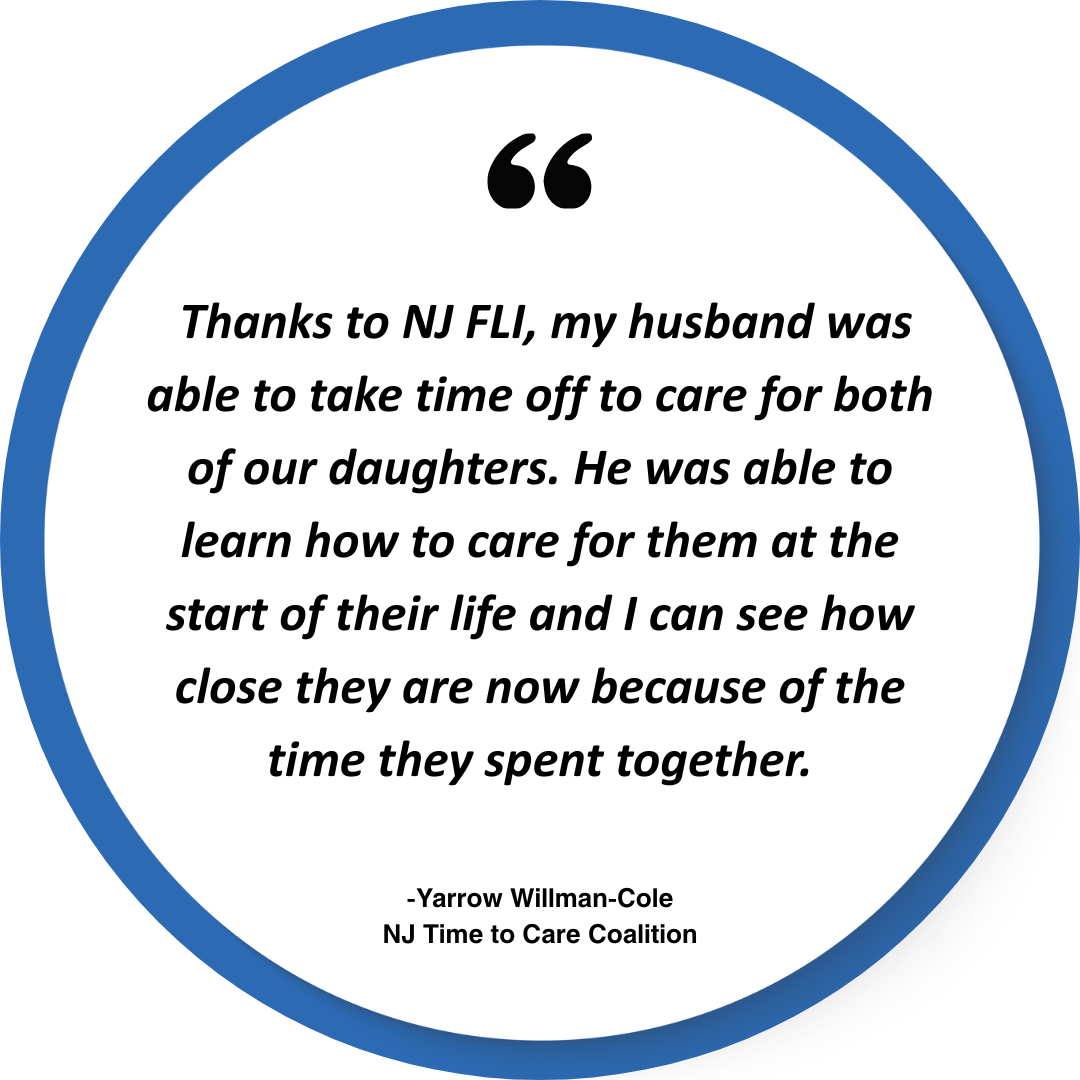
"There is a very real stigma dads can face when taking leave to bond with their new children,” says Yarrow Willman-Cole of the NJ Time to Care Coalition. "But New Jersey's Family Leave Insurance is available to both dads and moms equally. However, because NJ's program lacks robust job protections, the fear of job loss is a major reason for dads opting not to take leave, along with low benefits and affordability. What fathers need as part of our paid family leave program is job guarantee so they can count on having stability in wages and employment after leave. After all, what good is paid family leave if your job is not there for you when you go back?”

Why is Paternal Leave So Important?
Recent research has revealed the neurological and hormonal changes that take place in fathers that result in more effective and engaging parenting. One study found how oxytocin, a hormone typically discussed in the maternal context, is also a key ingredient in promoting father-infant bonding and is produced through contact and connection with the newborn.

Teal And White Modern Quote Of The Day Instagram Post (5)

Equally important, a father's active involvement in child care and household responsibilities can help ease the transition into parenthood and help the entire family adjust more smoothly when welcoming additional children. Other benefits include reduced risk of maternal postpartum health complications and improved maternal mental health, increased confidence in parenting, and higher level of parental involvement. When dads take leave to care for their newborns it can establish a foundation for life.

Moving Forward: What Can Be Done To Support Dads? 

1. Ensure full pay for parental leave
Governor Murphy’s 2025 State of the State Address emphasized his commitment to delivering economic security and opportunity to all New Jersyans. Included in this effort is to provide 12 weeks of fully paid parental leave to every state employee welcoming a new child. In his 2025 budget, the Governor made good on this promise by allocating $10 million to provide state employees with full pay while they are on family leave caring for a newborn. He stated "Nobody should ever have to sacrifice their economic security in order to be a present and engaged parent."

Although not specifically for fathers, this policy benefits them by allowing them to take time off to care for their newborn without the concern of lost income. It also promotes gender equality through incentivising both parents to take time off equally, enabling fathers to play a more active role in their child’s early life, and support their partners. While this change will only impact the state’s public sector workers, it is hoped it will eventually become the norm for all.

Many employers, including ACNJ, have implemented this practice of making workers' salaries whole while they are on leave, and we hope this move by the state leads the way for more employers to adopt a similar policy to create a fairer and healthier workforce.

 2. End the stigma
While Governor Murphy’s proposed increase in the percentage of wages may increase the uptake for fathers in the state’s public sector, social barriers-–such as stigma— still create obstacles for fathers considering leave. We need a cultural shift in how we view fathers staying home with their families during this crucial moment. Research indicates that employers must also play a role in this shift by emphasizing the value of bonding with newborns and supporting maternal health.

3. Guarantee job protection
Employers must consider incorporating job protection into paid leave policies, ensuring that fathers can take time off without the fear of losing their jobs. By offering job security alongside paid leave, companies not only support family well-being but also contribute to a more equitable and supportive workplace for all employees.

Let's Normalize Shared Caregiving
While NJ FLI is a great resource, there is clearly much more to be done to truly and effectively support all families. Caregiving is not just a mom's job and unfortunately, fathers fear taking parental leave to share that responsibility. If we do not address the barriers that prevent fathers from taking advantage of the paid leave, we continue to deprive them from bonding with their children--and that is a loss that affects not only them, but the whole family.

Your stories matter--let's create change TOGETHER! Please take a few minutes to share your experiences with Paid Family Leave (whether or not you took it) to help shape future advocacy efforts.