What’s New?

Governor Murphy’s Historic Early Childhood Education Legislation Marks Critical Progress with Room for Improvement

Posted on July 11, 2025

UPDATE: New Jersey Universal Preschool

This week, Governor Murphy signed significant legislation expanding access to early education, addressing several policy priorities ACNJ has long advocated for, while also leaving areas of opportunity for further improvement.

The centerpiece legislation (S3910/A5717) codifies New Jersey's preschool funding formula into statute, strengthening and sustaining the state’s pre-K expansion effort, while also setting the course to provide full-day kindergarten by 2030. This represents the culmination of decades of advocacy, beginning with ACNJ’s involvement in the Abbott v. Burke Supreme Court decision more than 25 years ago, which mandated high-quality public preschool for children in high-poverty districts.

The other two bills include:

  • The authorization of three-year contracts between school districts and community childcare providers, providing much-needed stability for community providers (S4476/A5780).
  • Amendments to the Fiscal Year 2026 Appropriations Act, updating various language provisions concerning Preschool Education Aid to align with legislation (S3910/A5717) that modifies the allocation of Preschool Education Aid ( A5908/S4695). 
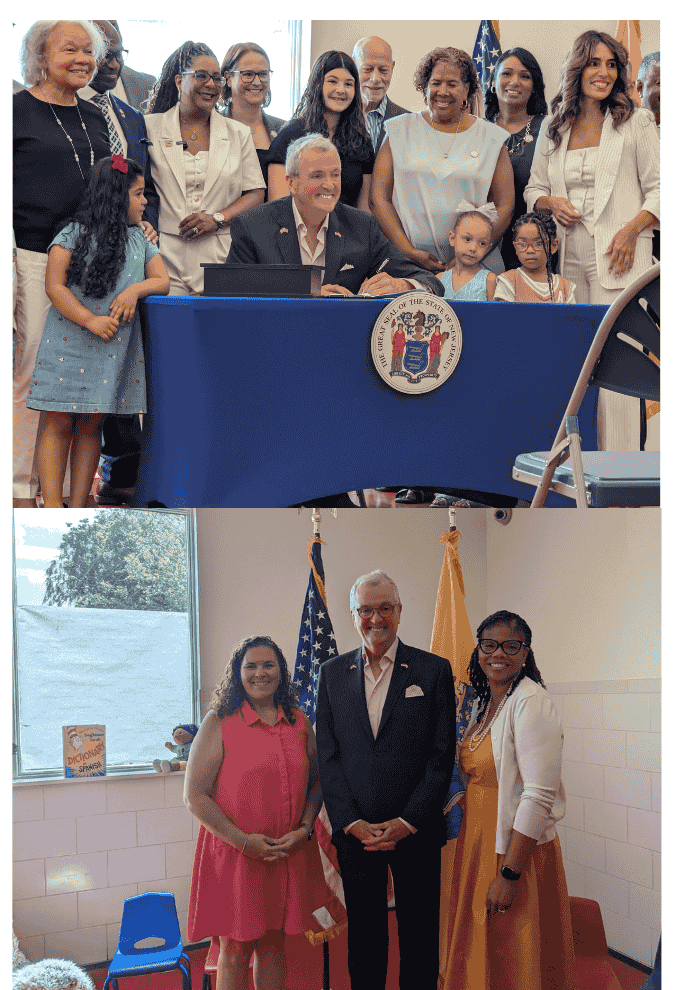
Gov Murphy bill signing 7-11-2025

Governor Phil Murphy signed significant legislation to expand access to early childhood education on July 11, 2025.

Key Provisions Aligned with ACNJ Priorities

  • Ensuring Universal Preschool Expansion: The law codifies annual preschool expansion grants and revises preschool education aid requirements, providing the predictable investment our early learning system needs to thrive.
  • Enhanced Stability for Providers: Recognizing that community-based providers are essential partners, the legislation extends contract terms from one to three years. Multi-year contracts makes it easier for providers to secure funding for facility upgrades and new program start-up costs, as well as planning. The previous one-year contract agreements created uncertainty about program continuation, not knowing if they would be renewed another year. Extended contract terms now offer the stability needed for meaningful facility investments and stronger partnerships. 
  • Comprehensive Coordination: The legislation also addresses the fragmentation ACNJ has long identified as a barrier to effective preschool delivery, improving coordination and transparency by:
    • Establishing a Universal Preschool Implementation Steering Committee with representatives from key State agencies and the Legislature.
    • Requiring the Departments of Education, Children and Families, and Human Services to maintain and annually update public information on preschool and child care providers.
    • Mandating annual reports to the Legislature on the status of preschool education and the effectiveness of the mixed-delivery model.
    • Directing State agencies to publish guidance on expanding access to high-quality preschool in high-need areas.

ACNJ thanks Governor Murphy for keeping his promise to expand early education to New Jersey’s youngest learners. Since taking office, 229 districts have been added to state-funded preschool programs. And more recently, in February 2025, the state announced that the Department of Education and Department of Children and Families would amend their rules to align state-funded and licensed child care centers to the same minimum space requirement of 42 square feet of usable space per child. This critical regulatory change, which ACNJ has long advocated for, removes a significant barrier that often prevented child care providers from participating in preschool expansion.

New Jersey’s public pre-K program is a nationally recognized model, demonstrating the profound impact of quality early education. Research by the National Institute for Early Education Research confirmed that students who attended Abbott preschools continued to excel through 10th grade, with a 15% reduction in grade retention and 7% decrease in special education placements.

Critical Gaps That Require Continued Attention

Although this legislation is a big step forward, the state can still do more to build a stronger, comprehensive early education system.

We know that a robust mixed-delivery model -public schools partnering with community child care centers- is essential to meeting the diverse needs of families. However, the legislation stops short of mandating it. Declining participation by private child care providers threatens the viability of the broader early care and education system. In former-Abbott districts, enrollment in the community decreased by 25% from 2009 to 2022, while in expansion districts, only 17% of preschoolers are served by private providers. The loss of preschool-aged children from community-based centers threatens the entire birth-to-five system by undermining the financial viability of infant and toddler care. This creates "infant toddler care deserts" that ultimately harm working families and the broader economy.

In addition, the legislation does not establish the pathways and timeframes to help existing early childhood educators meet the certification requirements, potentially exacerbating the teacher shortage crisis.

Conclusion

ACNJ commends Governor Murphy, Senate Majority Leader Ruiz, Assemblywoman Katz, and all the legislative sponsors for their leadership. As we work toward implementation, ACNJ remains committed to ensuring this legislation achieves its full potential by strengthening the mixed delivery system that serves as the backbone of quality early childhood education in New Jersey.

The promise of universal preschool is within reach. With continued advocacy and thoughtful implementation, New Jersey can build an early childhood system that truly serves all children and families.

For more information on this topic, contact Winifred at wsmith-jenkins@acnj.org.

Midwifery Saves Lives: Why New Jersey Must Expand Access to Midwifery Care

Posted on July 3, 2025

winifred headshot
Winifred Smith-Jenkins
Director of Early Childhood Policy and Advocacy

Too many mothers and babies in New Jersey are dying, and it doesn’t have to be this way. Midwifery care is a proven, life-saving solution. But outdated laws, systemic barriers, and a lack of awareness are limiting access to this vital care.

A Forgotten Legacy of Care

For centuries, midwives were the primary providers of childbirth care in the United States. Before hospitals became common, childbirth happened at home with the help of skilled midwives. Many of these midwives were enslaved African women, Indigenous women, and immigrants who passed down knowledge through generations and provided trusted care in their communities.

Known as “granny midwives,” Black women in the South cared for mothers in rural and low-income communities well into the 1940s.These midwives provided prenatal education, labor support, delivery, and postpartum care at a time when hospitals were not accessible or welcoming to everyone. Their care kept communities alive and mothers safe.

2025 election badge2

Let's make children and their
families the center of the
2025 Election Campaign.

Starting in the early 1900s, hospitals and male doctors began to take over childbirth care. Public health campaigns and new licensing rules, often shaped by racism and bias, pushed midwives out by calling their work outdated or unsafe, without much proof. As a result, trusted community-led models of maternal care that worked for generations were lost.

Bringing midwives back into the center of maternity care isn’t just a return to tradition. It’s a matter of equity, cultural respect, and saving lives, especially for the families most at risk.

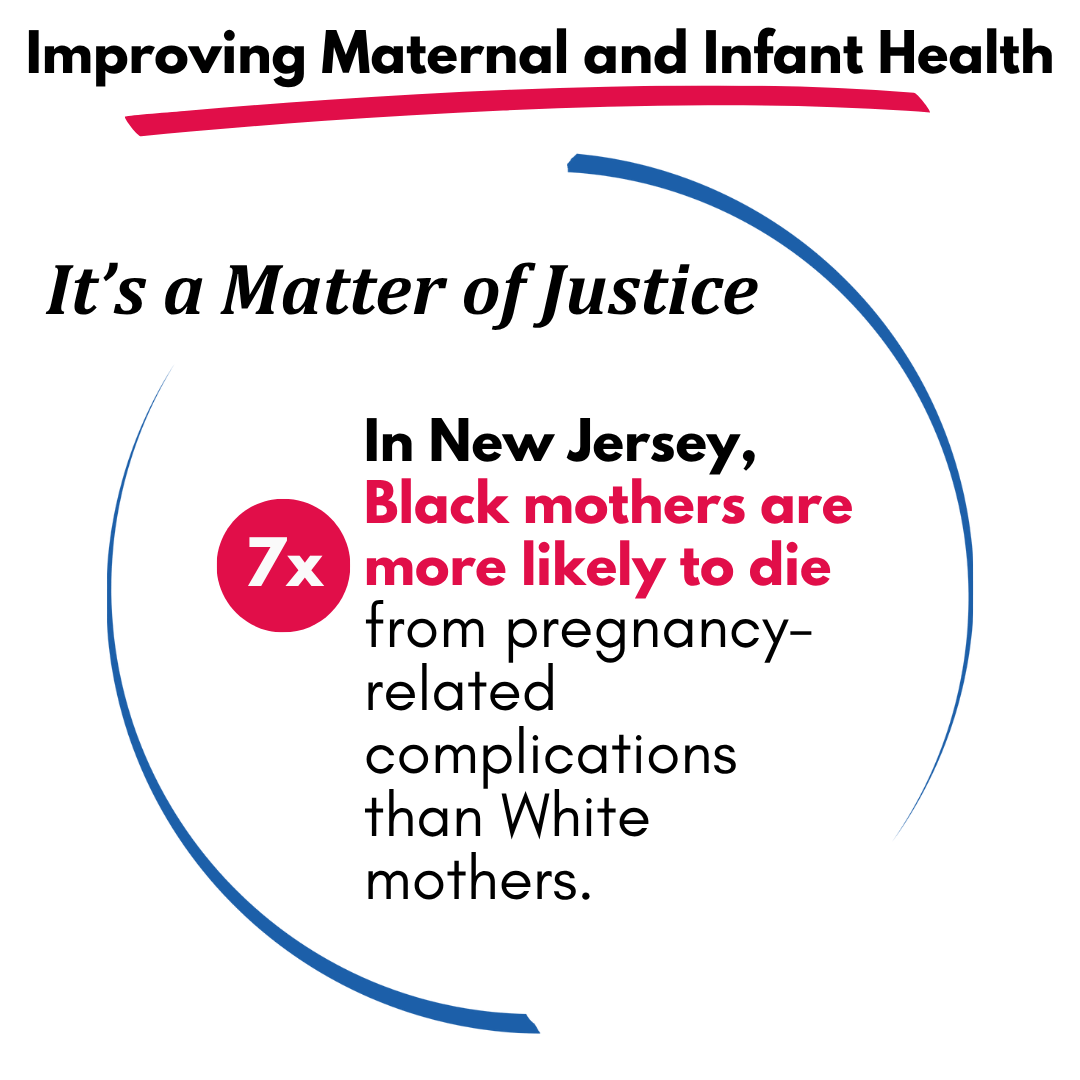
It's a Matter of Justice - Maternal death

What Exactly Is a Midwife?

A midwife is a highly trained clinical professional who specializes in healthy pregnancy, labor, birth, and postpartum care. They provide holistic, respectful, and culturally responsive care that centers around patient autonomy, trust, and informed decision-making.

Midwives are different from other birth workers: 

  • Midwives are not doulas – Doulas offer emotional and physical support, not clinical care.
  • Midwives are not OB-GYNs – OBs are trained as surgeons to manage high-risk pregnancies and complications.
  • Midwives are essential to a modern, integrated maternity care system that meets the needs of diverse families.

The Research is Clear: Midwives Save Lives

Research overwhelmingly shows that midwife-led care improves outcomes for mothers and babies; especially for Black families, who face the highest rates of maternal and infant mortality in New Jersey.

  • States with stronger midwifery integration have:
    • Lower rates of neonatal death, preterm birth, and low birthweight
    • Better outcomes for Black mothers and infants
  • Midwife-led continuity of care reduces fetal loss and neonatal death by up to 16%
  • Countries with strong midwifery systems (e.g., the UK, Norway) have significantly lower neonatal mortality than the U.S.
  • Midwifery practices—like delayed cord clamping, early breastfeeding, and reduced unnecessary interventions—support healthier newborn transitions

Barriers in New Jersey

Considering the benefits of midwives, New Jersey makes it hard for them to practice. The result? Families lose access to choices and the care they need.

Some of the biggest barriers: 

  • Restrictive laws prevent midwives from practicing independently
  • Midwives face burnout and a lack of supportive infrastructure
  • There is a shortage of racially and culturally diverse midwives
  • Aspiring midwives lack accessible training and mentorship pathways
  • Consumers, especially in underserved areas, lack access to midwifery care

New Jersey recognizes three midwifery credentials:

  • Certified Nurse Midwife (CNM) – Must be an RN and complete graduate midwifery training
  • Certified Midwife (CM) – Similar to CNM but with a non-nursing health science background
  • Certified Professional Midwife (CPM) – Trained through accredited programs or apprenticeship, often focused on home and birth center deliveries

Only CNMs and CMs can work in hospitals, but under the supervision of doctors. CPMs often cannot get paid or included in care networks, even though they are qualified. These limits make it harder for families to access the care they need.

Policy Solutions We Need Now

To improve maternal and infant health outcomes, New Jersey must:

  • Grant full practice authority to CNMs and CMs
  • Integrate and reimburse CPMs fairly
  • Establish an independent midwifery licensing board
  • Improve home-to-hospital transfer protocols
  • Expand pathways and scholarships for future midwives, especially midwives of color
  • Raise public awareness about the midwifery model of care

It’s a Matter of Justice

These outcomes are not inevitable. They are the result of systemic failures that we have the power to change. Expanding access to midwifery care is a critical, evidence-based solution.

What to Ask Candidates This Election Year

This election year, ask every candidate for governor:

  • What will you do to expand access to midwives?
  • How will you improve maternal and infant health for all families in New Jersey?

The future of maternal and infant health depends on bold, inclusive leadership, and midwifery must be part of the solution.

U.S. House of Representatives Moved the Federal Budget Process Forward

Posted on July 1, 2025

Last Thursday, the U.S. House of Representatives passed the “One Big Beautiful Bill Act” along party lines 215 (R)/214 (D).  The bill now moves to the U.S. Senate for their consideration. If H.R. 1 becomes law, several provisions of the bill will have a serious and devastating impact on NJ FamilyCare (which is funded by Medicaid) and the Supplemental Nutrition Assistance Program, or SNAP. Below are highlights. There are also provisions related to tax credits and student loans, which will impact children, youth, and families. We will update the ACNJ website as we learn more, so continue to check in.

Medicaid Related Sections

Almost 20% of New Jersey residents have health insurance coverage through NJ FamilyCare, which is funded by federal and state Medicaid dollars, as well as the federal Children’s Health Insurance Program (CHIP). This includes over 860,000 children. H.R. 1 will “save” nearly $700 billion in spending over the next 10 years by imposing additional eligibility requirements or restricting eligibility, thus reducing the number of people being covered by state public health insurance programs like NJ FamilyCare. H.R. 1 includes the following provisions:

  • Impose 80 hours of work or community engagement activities, such as education or volunteer service, for individuals ages 19 to 64 applying for coverage or enrolled through the Affordable Care Act expansion group, no later than December 31, 2026. This population is commonly referred to as the Medicaid expansion population. ACNJ was pleased to see an exemption in the bill for pregnant women, individuals under the age of 19 or over the age of 64, foster youth and former foster youth under the age of 26, members of tribes, and individuals who are considered “medically frail.” Individuals will have to verify that they are exempt.
  • Reduce retroactive coverage for Medicaid and Children’s Health Insurance Program (CHIP) to one month from three months as of December 31, 2026.
  • Require redetermination of eligibility every six months for the Medicaid expansion populations to begin on December 31, 2026.
  • Freeze current amount of provider taxes for states.
  • Require states to impose co-pays for Medicaid expansion adults with incomes over 100% of the federal poverty level (FPL). This cost-sharing may not exceed $35 per service. Exempted services include: primary care services, mental health care services, or substance use disorder services.
  • Impose new penalties for states that provide healthcare to undocumented immigrants. H.R. 1 would reduce the federal Medicaid expansion match rate from 90% to 80% for states like New Jersey that use state funds to provide health coverage for children, regardless of their immigration status, or pregnant adults covered under the Medicaid option for these groups.

Supplemental Nutrition Assistance Program (SNAP) Related Sections 

Close to 360,000 New Jersey children participate in SNAP currently. The House Resolution will reduce spending on SNAP by approximately $267 billion over the next ten years by restricting eligibility and shifting a greater percentage of the cost for both the benefit and administration of SNAP to the states.

Currently, the actual SNAP benefit is paid with federal dollars. H.R. 1 shifts 5% of the benefit and an additional 25% of the administrative costs to the states. According to the Center on Budget and Policy Priorities, if every state paid 5% of food benefit costs last year, states would have needed to collectively pay about $4.7 billion. The New Jersey Department of Human Services estimates that the additional 25% of administrative costs being shifted to the states will cost New Jersey counties an additional $78 million. Following are SNAP related provisions:

  • Limit the frequency of updates to the Thrifty Food Plan (TFP)—the basis for calculating SNAP benefits—to once every five years, requiring cost neutrality in updates.
  • Expand work required for able-bodied adults without dependents, raising the age from 54 to 64, and narrow the definition of a dependent child to those under the age of 7, limiting caregiving exemptions.
  • Restrict the automatic qualification for utility deductions in SNAP calculations to households with elderly or disabled members and limit income exclusions for state energy assistance.
  • Require states to contribute at least 5% toward SNAP benefit costs starting in FY 2028, with higher contributions (up to 25%) required for states with high SNAP error rates. Currently, the federal government pays 100% of the SNAP benefit.
  • Increase in the state’s share of administrative costs for implementing SNAP to 75%.

Ways and Means Bill Sections 

  • For the Child Tax Credit
    • Temporarily increase the Child Tax Credit to $2500 until 2028 and then return to $2000.
    • Set the refundable portion of the credit to $1400.
    • Require that individuals have earned income to be eligible for the credit.
    • Require a social security number for children, tax filers, and the tax filer’s spouse if married.
  • Temporarily boost the standard deduction — a $1,000 increase for individuals, bringing it to $16,000 for individual filers, and a $2,000 boost for joint filers, bringing it to $32,000. The deduction reduces the amount of income that is actually subject to income tax.
  • Increase the State and Local Tax (SALT) cap to $40,000 for incomes up to $500,000, with the cap phasing downward for those with higher incomes. Also, the cap and income threshold will increase 1% annually over 10 years.
  • Create a tax credit for school vouchers.
  • Parents or guardians who open new “Trump” accounts for their children will receive $1,000 from the federal government for babies born between Jan. 1, 2024 and Dec. 31, 2028. Families could add $5,000 a year, however, funds cannot be withdrawn before age 18, at which time they could access up to 50% of the money to pay for higher education, training, and first-time home purchases. At age 30, account holders have access to the full balance of the account for any purpose.

Pell Related Sections

  • Eliminate Pell Grant eligibility for less-than-half-time students.
  • Raise the definition of “full-time” to 15 credits per semester to get full Pell (from the current 12 credits).
  • Eliminate Stafford subsidized loans.
  • Eliminate graduate student PLUS loans and limit parent PLUS loans.
  • Eliminate existing income-contingent repayment plans and create a single income-based repayment plan, increasing the percentage of discretionary income and the number of payments needed before a loan can be forgiven.
  • Prevent the Department of Education from promulgating regulations that increase loan subsidy costs or are economically significant (no new debt relief regulations).
  • Clarify that payments made by new borrowers on or after July 1, 2025, who are serving in a medical or dental residency, do not count as a qualifying payment for purposes of the Public Service Loan Forgiveness Program.
  • Cap federal loans at the median cost of the student’s program of study.

What about the kids? 2025 Social Media Campaign

Posted on June 30, 2025

What about the kids logo outline

Your Voice Matters

Ask New Jersey candidates "What about the kids?" Help us get these issues on their campaign agendas. Share the posts below and make sure to tag candidates in your district.

Because better outcomes for children lead to thriving communities and a stronger economy when we invest in:

Facebook Feed Posts
Maternal & Infant Health
Child Care
Positive Youth Development
Instagram Feed Posts
Twitter Feed Posts
Maternal & Infant Health

Child Care

Positive Youth Development