What’s New?

Why Wraparound Care is Essential

Posted on September 2, 2025

Co-Authored by:
Kyla Ginsberg
Student Intern

Cindy Shields
Early Childhood Senior Policy Analyst

Winifred Smith-Jenkins
Director of Early Childhood Policy and Advocacy

For more information on this topic, contact Cindy at cshields@acnj.org or Winifred at wsmith-jenkins@acnj.org.

For many families, the hours before and after school are just as important as the school day itself, making wraparound care essential for parents who work or go to school. Wraparound care, also called out-of-school time (OST), includes before-school programs, after-school programs, and summer care. It “wraps around” the traditional school day, providing children with safe, structured, and enriching activities while giving parents the support they need to work full-time. Far from being an add-on, wraparound care is a vital service that sustains families and strengthens local economies.

How the Need for Wraparound Care Emerged

Before the Industrial Revolution, child care in the United States was largely informal. As industrialization expanded in the late 1800s, families increasingly relied on two incomes, and stricter child labor laws limited children’s participation in the workforce. This shift created a pressing need for care outside the home. In cities like New York, Boston, and Philadelphia, “infant” or “day” nurseries emerged, providing safe spaces for children while their parents worked. By the 1970s-80s, concerns about unsupervised "latchkey kids" led to increased investment in structured after-school programming as more women joined the workforce.

A Defining Moment for Child Care Policy in New Jersey

In New Jersey, the 1980s marked a turning point in child care policy. Counties created Child Care Resource & Referral (CCR&R) agencies, and local subsidy programs soon followed. (Child Care Association of NJ) In 1983, the state passed the Child Care Center Licensing Act and the Family Day Care Registration Act, establishing regulatory standards for both center-based and home-based care. (ACNJ) The first voucher-based subsidy program was launched in 1984 by North Jersey 4Cs, enabling families in Passaic County to access affordable wraparound care. (North Jersey 4Cs)

Why Wraparound Care Matters Today

Wraparound care plays a critical role for both families and the broader economy:

  • Safety and Supervision: Provides children with a safe, nurturing environment beyond the school day.
  • Workforce Stability: Enables parents to maintain steady employment without compromising their children’s well-being.
  • Sustaining Child Care Centers: Revenue from wraparound care helps centers remain financially viable, ensuring that early learning programs continue to serve communities.
  • Economic Impact: Reliable child care, including wraparound services, is a cornerstone of workforce participation and economic growth.

Benefits for Children

High-quality wraparound programs go beyond supervision. They enrich children’s lives.

  • Academic Support: Many programs provide homework help, tutoring, and enrichment opportunities.
  • Social-Emotional Growth: Activities build relationships, teamwork, and resilience.
  • Health and Wellness: Programs often include outdoor play, clubs, and nutritious meals or snacks.
  • Closing Opportunity Gaps: For children from under-resourced families, before- and after-school programs provide access to experiences such as arts, sports,  and STEM that they might otherwise miss.

The Role of Child Care Subsidies in New Jersey

In New Jersey, the Child Care Assistance Program (CCAP), overseen by the Department of Human Services’ Division of Family Development, has been a critical lifeline for families. However, as of August 1, 2025, the program has stopped accepting new applications due to budget shortfalls. Families already enrolled will also face higher co-pays at their next redetermination.

Without robust funding for subsidies, the impacts may be far-reaching:

  • Parents may be forced to leave the workforce or reduce hours due to unaffordable child care costs.
  • Child care centers may limit services or close programs, reducing available options.
  • The broader New Jersey economy may experience disruptions as workforce participation declines.

Moving Forward

Wraparound care is not a luxury. It is a foundational service for families, children, and the economy. Ensuring that it remains accessible and affordable is a shared responsibility.

Questions for Policymakers:

  • How will you ensure equitable access to high-quality wraparound care for New Jersey families now and in the future?
  • What steps will you take to support and fairly compensate the child care workforce?
  • How will you address budget challenges to protect the subsidies that keep families working and children thriving?

2025 election badge2

Let's make children and their
families the center of the
2025 Election Campaign.

Birth Centers Bring Dignity, Choice, and Health Equity to New Jersey Families

Posted on August 25, 2025

Trinisha Williams Headshot
Trinisha Williams, CM, MPH
President, American Association of Birth Centers (AABC)

As a midwife, an aunt, and a community advocate, I’ve spent over two decades walking alongside birthing people through their most intimate, powerful moments. I've seen firsthand how and where someone gives birth can shape their entire story—not just physically, but emotionally, spiritually, and culturally.

Right now, in too many places across New Jersey, the only option is a hospital. Families often don’t have access to birth centers, even if they are low-risk, healthy, and want a different experience. We must be clear: If there is only one option, then there is no real choice.

2025 election badge2

Let's make children and their
families the center of the
2025 Election Campaign.

Why Birth Centers Matter

Birth centers are not a luxury. They are an evidence-based, cost-effective, and community-centered model of care that has been proven to:

Birth centers are staffed by midwives and care teams who provide high-touch, low-intervention support. They care for people who are healthy and low-risk, and desire a more personalized birth experience. The centers offer services that matter deeply to families, such as water birth, continuity of care, and provider-to-patient ratios that allow for trust, education, and support. They also meet people where they are, with a deep respect for spiritual and culturally-rooted traditions, family structures, and lived experiences.

Addressing Birth Trauma with Compassionate Care

Far too many birthing people in New Jersey walk away from their births feeling unheard, dismissed, or even harmed. Birth trauma is real, and it’s a public health issue especially among Black and Brown families who face bias, neglect, or coercion in traditional hospital settings.

Birth centers provide a trauma-informed approach that centers on:

  • Continuity of care: the same team before, during, and after birth
  • Informed consent: making sure birthing people are active participants in their care
  • Emotional and physical safety: with time, space, and personalized support
  • Non-clinical comforts: like water birth, mobility, and uninterrupted bonding

When families feel respected and cared for, they are more likely to heal fully, bond deeply, and return to their communities stronger and more empowered.

A Solution to New Jersey's Maternal Health Crisis

New Jersey has one of the worst maternal mortality rates in the country; and the statistics are even more devastating for Black mothers, who are seven times more likely to die from pregnancy-related causes than their white counterparts.

We cannot afford to ignore these outcomes. We cannot keep pouring money into a system that was never built for all of us. We must fund, license, and support birth centers across New Jersey— especially in the neighborhoods where outcomes are worst, and where community-rooted, culturally responsive care is most needed.

Reclaiming Power and Choice

At the heart of midwifery care and birth centers is a simple truth: Birth belongs to the birthing person. When families are educated about their options and supported in their choices, they are empowered and healthier.

We need policies that:

  • Expand access to birth center care statewide.
  • Protect Medicaid and insurance coverage for birth center services.
  • Invest in Black- and Brown-led midwifery care models.
  • Build new birth centers in underserved areas, including South Jersey, rural communities, and urban perinatal health deserts.
  • Ensure midwifery autonomy by establishing a state Board of Midwifery.

To New Jersey’s Next Governor: Make Birth Centers Part of the Plan

We urge every gubernatorial candidate to include birth centers and midwifery-led care in their maternal health platform. If you are serious about saving the lives of birthing people in New Jersey, especially Black and Brown lives, then birth centers must be a part of your vision.

Let’s give families real options. Let’s shift from fear to trust. Let’s fund models that work.

Because birth should be safe. Birth should be sacred. Birth should be ours.

New law expands parents’ rights to advance notice before IEP meetings

Posted on August 15, 2025

Nina-web

Nina Peckman, Esq.
ACNJ Staff Attorney


Starting with the 2025-2026 school year, a new special education law will expand a parent’s right to receive advance notice regarding certain information before an annual IEP meeting takes place.

Under federal and state special education laws, parents have what are known as “participation rights”. The purpose of these laws is to ensure that parents have a meaningful opportunity to provide their input regarding their child’s education program. These rights also help parents provide well-informed consent when their written consent is required by law. Some of the existing laws that support these participation rights require school districts:

  • Explain the child study team evaluation reports and the proposed IEP
  • Share the reasons for child study team decisions
  • Provide advanced notice for school meetings and prior to implementing school decisions

The new law signed by Governor Murphy on July 22, 2025 requires additional notices and information to be provided to parents before an annual IEP meeting. (The annual IEP meeting is the meeting that must occur yearly around the anniversary date of the initial agreed upon IEP.) This law will help parents better understand their children’s progress and proposed IEPs and to be more effective at offering input and asking important questions at IEP meetings.

Per the law, at least 2 business days before the annual review, parents must receive a written statement by regular mail--and by email if the child study team has the parent’s email address. The statement should include:

  • What will be discussed at the meeting
  • The student’s current levels of academic and functional performance
  • A list of names of any required school staff IEP members who will not attend and a statement of their observations and recommendations for the program and services they are responsible for. Parents have the right to reschedule the meeting for a date when all IEP members can attend.
  • The parent’s right to provide input and feedback at the IEP meeting

The law also requires the New Jersey Department of Education to establish an IEP Working Group “to provide recommendations to the Department regarding methods to improve the development and implementation of the IEPs and to ensure parent involvement in the process. “ The committee will be made up of administrators, teachers, parents and advocates and child study team members.

For more information See P.L. 2025 c.107: https://pub.njleg.state.nj.us/Bills/2024/S4000/3982_R1.PDF

For further information, feel free to contact Nina Peckman, ACNJ Staff Attorney at npeckman@acnj.org.

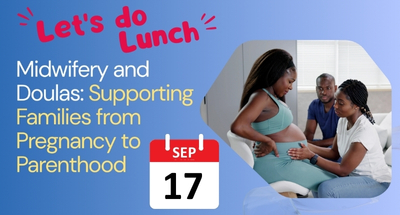
Join us for September’s Lunch and Learn on Midwifery and Doulas

Posted on August 14, 2025

Sep 17 Lunch N Learn

Join us for a Lunch and Learn session that explores how midwives and doulas provide critical support to families before, during, and after childbirth.

Wednesday, September 17 @ 12PM Via Zoom

We’ll discuss the benefits for maternal and infant health, how these services can improve birth outcomes, and the barriers families face in accessing them. We’ll also look at policy and community efforts that expand access, particularly for underserved populations. Stay tuned for details about the speakers.

Why New Jersey’s Next Governor Must Prioritize Early Childhood Educator Compensation

Posted on August 11, 2025

headshot of Meghan Tavormina
Meghan Tavormina
Director of Public Policy & Advocacy at NJ Association for the Education of Young Children (NJAEYC)

The Math Doesn’t Add Up

Hard work and low pay rarely lead to retention, quality, or professional growth; yet that’s the reality facing much of New Jersey’s early childhood education workforce. Unlike other minimum-wage jobs designed for high turnover or temporary employment, early education roles demand skill, experience, and emotional labor. These aren’t stepping-stone positions. They’re foundational to a child’s development and a family’s stability. And yet, far too often, early educators are paid less than a living wage.

We know that raising children is expensive. So why is caring for and educating them treated as low-wage work? The answer lies in what we choose to value and how our public systems have failed to keep pace with our growing need for child care. Consider this: a child care center accepting a family's subsidy for infant care through New Jersey’s Child Care Assistance Program receives just $7.75 per hour. With a 1:4 teacher-to-infant ratio, that translates to $31 per hour in total revenue to cover one teacher’s time. Out of that, the center must cover rent, insurance, supplies, administrative costs, utilities, and breaks, leaving very little for wages. The math doesn’t add up. And it’s time our next governor helps fix it.

2025 election badge2

Let's make children and their
families the center of the
2025 Election Campaign.

A Legacy of Devaluation: How History Shapes Today’s Pay Gap

The early childhood profession has long suffered from devaluing language and policies. Terms like “daycare,” “babysitter,” or “hired help” have shaped public perception and reinforced the notion that early care is not real education, and certainly not worthy of real investment. These messages haven’t just shaped how society sees early educators; they’ve also influenced how educators view themselves. The roots of this problem run deep. Child care in the U.S. has historically depended on the labor of Black and Brown women, whose work was undervalued and underpaid. This legacy continues to shape today’s compensation structures.

For decades, early care was viewed primarily as a service to supervise children while their parents were at work rather than a field requiring knowledge, expertise, and deep emotional labor. And yet, as research has confirmed the critical importance of the first five years of life, we’ve seen moments where policymakers have acknowledged our value — from the Comprehensive Child Development Act of 1971 that made it all the way to President Nixon’s desk before it was vetoed, to the creation of Head Start, to Abbott preschool in New Jersey, and more recently, to post-COVID compensation gains in states like New Mexico, Washington D.C., and Kentucky. While New Jersey has made meaningful strides in areas like apprenticeships, mixed-delivery preschool, scholarship supports, and career lattices, we have yet to take the leap on compensation. Until we do, early education will remain stuck at the intersection of essential and expendable – a career in name but not in pay.

$32,000 a Year: A Salary That Keeps Families in Poverty

The data paints a clear and troubling picture: early childhood educators in New Jersey earn, on average, $32,000 per year – far below what is needed to support a family in this state. According to the Center for the Study of Child Care Employment, nearly half of child care workers nationally rely on some form of public assistance. In New Jersey, even lead teachers with degrees and years of experience often earn only minimum wage or slightly more. These low wages contribute directly to high turnover, disrupting continuity of care and undermining child development.

Preschool Gains, Infant-Toddler Gaps: A Broken System

While preschool expansion has opened the door to increased compensation in some settings, particularly for qualified teachers working in publicly funded mixed-delivery programs, it is not a comprehensive solution. Infant, toddler, and two-year-old teachers are consistently left out of wage improvements, despite performing equally demanding and developmentally critical work. Additionally, many community-based providers remain excluded from preschool funding opportunities due to budget constraints or district-level decisions, creating a two-tiered system where some educators benefit and others remain stuck in poverty-level wages.  Even in community-based programs where preschool expansion has led to improvements in wages and benefits, early educators still earn less than their in-district counterparts.

Brain Science Is Clear, But Our Policies Aren’t

This fractured landscape undermines stability and fails to recognize early educators as the skilled professionals they are. Brain science confirms that nurturing, responsive relationships in the earliest years shape lifelong outcomes. Until our investments match that science, across the full birth-to-five spectrum and across all settings, New Jersey’s early education system will continue to fall short of its potential for children, families, and the workforce that serves them.

A Message to New Jersey’s Next Governor: Value the Workforce, Secure the Future

To New Jersey’s next governor: The strength of our child care system and the future of our youngest learners depend on how we value the people who care for and educate them. High-quality early learning cannot exist without a stable, well-supported workforce. Yet today, too many early educators live in poverty, leave the field out of necessity, and are denied the professional recognition and compensation they deserve. We have the tools to change that. With bold leadership, we can build a system where early educators earn a living wage, have access to training and benefits, and are able to support their own families while supporting ours. This is more than a workforce issue; it’s a matter of opportunity, economic growth, and doing right by New Jersey’s children. The path forward is clear. What we need now is the political will to walk it.