Posted on October 30, 2025


Posted on October 30, 2025
Posted on October 30, 2025
We know that stories can help policymakers truly understand what is working for families and what challenges still need to be addressed. ACNJ gathered and shared parents’ stories and experiences in finding and using services to support their children.
Posted on October 30, 2025
The Newark Public School District has been in a transitional period since regaining control from the state in 2020. This data snapshot gives a brief overview of how the district is doing as it works toward building an enriched educational ecosystem that provides excellent education for every child in Newark.
This data snapshot is part of a series that will zero in on issues affecting the city's children.
RELATED STORIES

Posted on October 27, 2025
Authored by:
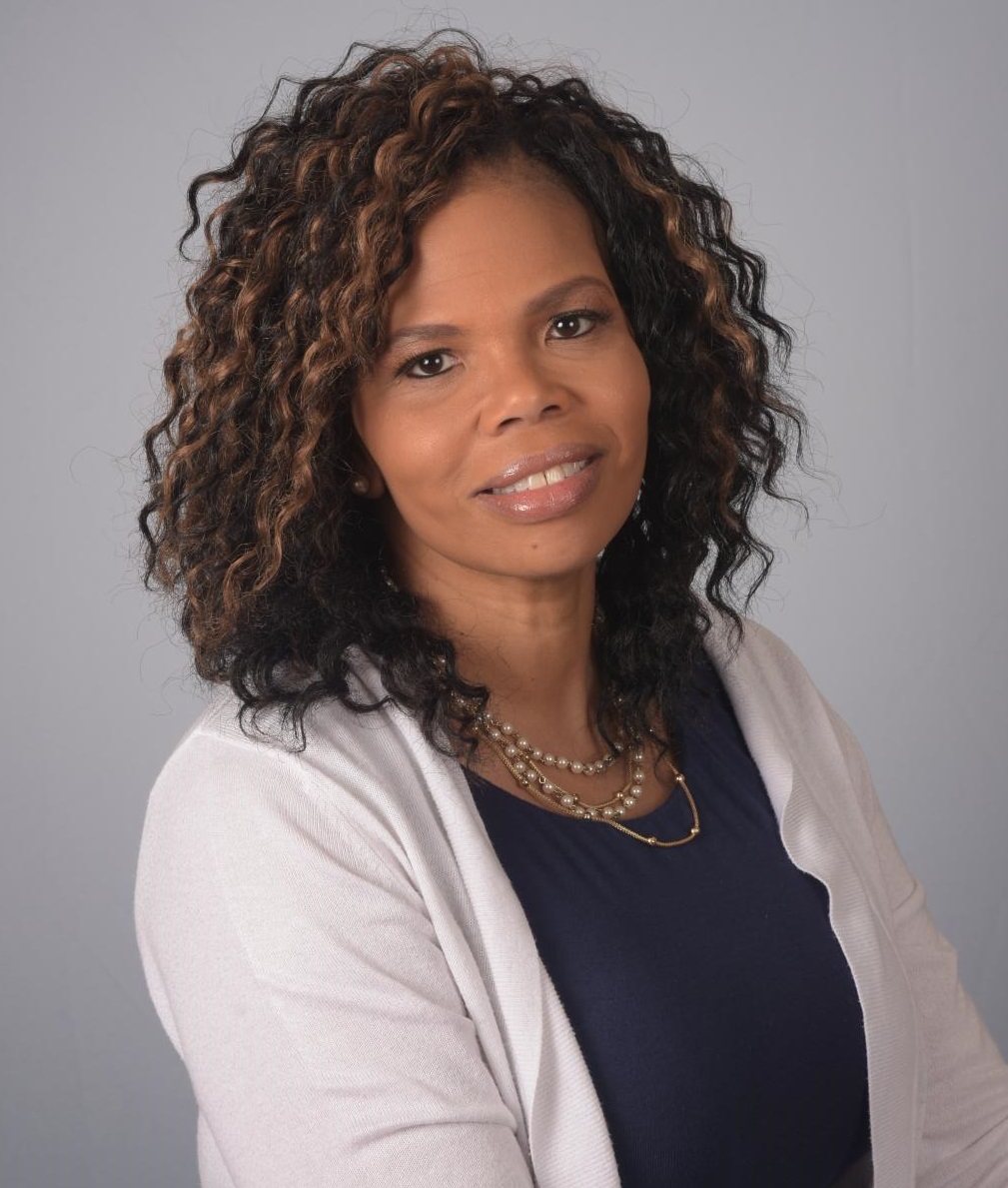
Winifred Smith-Jenkins, Ed.D.
Director of Early Childhood Policy and Advocacy
For more information on this topic, contact Winifred at wsmith-jenkins@acnj.org.
As New Jersey stands at a pivotal moment in its economic and social history, the next governor has an unprecedented opportunity, and responsibility, to secure the foundation of the state’s future: its child care system. Few policy areas are as critical to the health of New Jersey’s economy, workforce participation, and children’s long-term success as affordable, high-quality child care.
Child care is not just another line item in the state budget. It is the invisible infrastructure that makes everything else possible. What makes child care unique, and why it must be at the top of the next governor’s agenda, is that it is deeply interconnected with nearly every other statewide priority.

Let's make children and their
families the center of the
2025 Election Campaign.
Child care is the workforce behind every other workforce. When parents have access to reliable, affordable care, they can work, earn, and contribute to the state’s economy. When they don’t, businesses lose employees, productivity declines, and economic growth slows.
Inadequate child care costs the U.S. economy an estimated $122 billion annually in lost earnings, productivity, and revenue. Here in New Jersey, that translates into an estimated $3.6 billion economic loss each year; driven by parents missing work, employers struggling with absenteeism, and reduced tax revenues from families forced out of the labor force (First Five Years Fund, 2025; NJ Business & Industry Association, 2024).
With New Jersey losing an estimated $3.6 billion each year due to child care breakdowns, investing in affordable, reliable care isn’t just social policy. It's a sound economic strategy.
High-quality early childhood education doesn’t just help children. It strengthens the state’s long-term human capital. Children who attend quality early learning programs are more likely to succeed in school, graduate, and contribute productively as adults. Investing in early care is one of the most cost-effective strategies for building a skilled future workforce and reducing later spending on remedial education, health care, and social services.
The child care crisis disproportionately impacts women, especially mothers, who are often forced to reduce hours or leave the workforce entirely when child care is unavailable or unaffordable. That means lost income for families and lost talent for New Jersey employers.
But even when mothers remain employed, they face stalled career growth. A 2024 Robin Hood Foundation report found that 34% of working mothers declined a promotion or shifted to part-time work because of child care challenges (Robin Hood Foundation, 2024). These choices, often made out of necessity, limit women’s advancement and deepen gender wage gaps across industries.
Supporting the child care system is therefore an economic equity strategy, helping parents, particularly women, stay in and advance within the workforce.
Most child care providers in New Jersey are small businesses that employ local residents, pay local taxes, and support their communities. When those programs close, it’s not just a loss for families. It’s a loss for neighborhoods and local economies. A robust child care sector sustains thousands of jobs and allows other small businesses to thrive by ensuring their employees can show up to work consistently.
Quality child care also supports children’s health and development, providing safe environments where they can receive nutritious meals, developmental screenings, and early intervention when needed. When the system is weak, children are more vulnerable to neglect, instability, and lost learning opportunities. All of which have long-term public health implications.
In short: Child care is not just another policy issue. It's the foundation that underpins nearly every other goal a governor could hope to achieve. From economic competitiveness and educational excellence to family well-being and equity, investing in child care is the single smartest, most cross-cutting decision the next governor of New Jersey can make.
For too many New Jersey families, child care costs are simply out of reach. In some counties, the cost of infant care rivals or exceeds college tuition. A two-parent family earning the state’s median household income, about $126,000 a year, can expect to pay roughly $36,600 annually for center-based care for two young children (one infant and one preschooler). That means nearly 30% of their total income would go toward child care; over four times the federal affordability benchmark of 7%.
For a family earning less than the median, the percentage is even higher, forcing parents to make impossible choices between paying for care, saving for the future, or covering essentials like housing and health care. Affordable child care isn’t a “nice-to-have.” It’s the infrastructure that makes all other work possible. Without it, entire industries suffer, and families lose stability.
(Sources: First Five Years Fund, Child Care Aware of America, U.S. Department of Health & Human Services)
At the same time, the child care providers who sustain this essential system are struggling to stay open. The child care industry is among the most heavily regulated sectors in New Jersey, and for good reason. These regulations are designed to protect the health, safety, and well-being of children, ensuring appropriate ratios of adults to children, staff training requirements, background checks, and facility standards that meet strict licensing criteria.
But compliance comes at a cost. Providers must maintain low child-to-staff ratios, employ qualified teachers, and meet facility, health, and insurance requirements. All while balancing increasing costs for rent, food, utilities, and supplies. These are labor-intensive businesses, meaning wages and benefits make up the largest portion of expenses. Yet, despite the level of skill, training, and responsibility required, many educators earn barely above minimum wage; far less than peers in other professions requiring comparable qualifications.
And even as programs struggle to meet state safety standards, they are being squeezed by skyrocketing insurance premiums. Many insurance carriers have begun pulling out of the child care market altogether, viewing it as “too high-risk.” Those that remain are charging astronomical rates, in some cases doubling or tripling premiums in a single year. A trend documented by multiple national reports (Bipartisan Policy Center, 2024; New America, 2024; Fast Company, 2024).
For small, community-based providers, especially family child care homes, these rising costs can mean the difference between staying open or closing their doors.
This is not a result of poor business practices. It’s a market failure. One that arises because the true cost of providing high-quality, safe, and developmentally appropriate care far exceeds what most families can afford to pay. The math simply doesn’t work: if providers raise tuition to cover actual costs, families are priced out. If they keep tuition lower to stay accessible, programs can’t pay teachers a living wage, or keep up with ballooning insurance costs.
Expecting families, already stretched to their breaking point, to shoulder higher costs is not the solution. The only sustainable way forward is through public investment. The kind of bold, systemic commitment that treats child care as essential infrastructure, just like roads, schools, and public transit.
The window to act is closing. The temporary federal relief funds that kept child care programs afloat during the pandemic have expired, and New Jersey’s system is already showing signs of strain. Across the country, programs are closing, educators are leaving, and families are feeling the squeeze, and New Jersey cannot afford to be next.
The warning signs are clear and urgent:
These facts make one thing clear: the system is already cracking. Programs are closing, teachers are leaving, and families are being turned away. Without bold and immediate public investment, New Jersey risks losing more of its child care infrastructure; and with it, the stability of its workforce and economy.
Delaying action doesn’t mean standing still. It means falling behind. The next governor will inherit a system at a tipping point. Choosing to invest now means building a stable, affordable, and equitable child care system that supports families, employers, and educators alike. Waiting means allowing it to collapse under its own weight, and paying far more to rebuild it later.
New Jersey has long been a national leader in education and innovation. The next governor has the chance to extend that legacy by treating child care as the public good it truly is. That means committing to sustainable public funding, investing in fair compensation for educators, and creating a system that ensures access to affordable, high-quality care for every family; no matter their income or zip code.
Investing in child care is not just the smart move, or the right move. It's the only way forward to secure a thriving, equitable future for New Jersey's children, families, and economy.
Posted on October 17, 2025
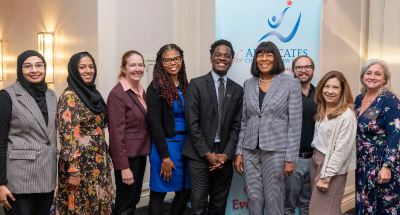
New Jersey's First Community-Based Preschool Private Provider Conference: The Future of Public Preschool: Building a Bold Vision Together convened on October 16, bringing together early childhood leaders, educators, funders, and advocates committed to strengthening community-based public pre-K partnerships across New Jersey.
The conference was created in response to the growing challenges community-based providers face as they work to deliver high-quality public preschool opportunities for children and families. Workshops included enrollment strategies, marketing, teacher retention, budget planning, certification requirements, and strengthening school district partnerships. View conference brochure.
Despite being essential partners in New Jersey’s mixed-delivery system, many providers struggle with issues of inequitable funding, workforce shortages, unclear communication from state and local agencies, and barriers to full inclusion within the state-funded pre-K system.
“The success of New Jersey’s public preschool system depends on the health and sustainability of community-based programs. Families deserve consistent, high-quality options, and that can only happen when every provider—public and private—is supported, valued, and equipped to thrive,” said Dr. Winifred Smith-Jenkins, Director of Early Childhood Policy and Advocacy at Advocates for Children of New Jersey, one of the co-organizers of the event.
“We want attendees to walk away feeling empowered, connected, and hopeful—with a clearer understanding of their collective power to influence policy, a renewed sense of partnership with state leaders, and concrete strategies to sustain and strengthen their programs. Most importantly, we want them to leave knowing their voices matter and that together, we can build a bold, equitable vision for the future of public preschool in New Jersey.”
Currently, only a third of pre-K students are enrolled in community-based child care centers or Head Start programs, meaning districts are missing a critical opportunity to expand access while strengthening the existing child care infrastructure.
“When you think about the amount of money that the state of New Jersey has invested in our youngest learners, it comes to $1,269,388,762. That's a lot of money. But it's still not enough because we're still not reaching 100% of the universe of young people,” said NJ Department of Education Assistant Commissioner Katrina McCombs who delivered opening remarks.
The conference was designed to give providers a unified space to be heard, to learn from one another, and to work collaboratively toward solutions that will strengthen the entire early childhood landscape.
“This conference is about partnership—because when community-based providers and the Department of Education come together, we create a shared vision for what’s possible. Together, we can build the systems and relationships that ensure every child in New Jersey can Start Strong,” said Meghan Tavormina, Director of Public Policy and Advocacy at the New Jersey Association for the Education of Young Children (NJAEYC), one of the co-organizers of the event. NJAEYC and ACNJ also co-chair Start Strong NJ, a campaign of the First 1,000 Days NJ Policy Coalition, bringing together business leaders, policymakers, providers, parents, and advocates committed to making affordable, high-quality child care available to every family in the state.
New Jersey's commitment to universal pre-K has enabled more than 60,000 3- and 4-year-olds access to full-day public preschool. Yet, to give thousands more children a strong start, school districts can leverage a mixed-delivery approach, which partners with community child care centers and Head Start programs to offer preschool within their existing classrooms. These providers do not just offer quality early learning—they provide the wraparound care working families depend on, including before-school, after-school, and summer programs, and many other family supports.
Comedian DJ Pryor delivered an emotional keynote, sharing how his fourth-grade teacher, Susan Brown, transformed his life by channeling his disruptive humor into a daily classroom comedy routine that ultimately launched his career. Pryor urged the audience of educators to persevere despite funding challenges and workforce shortages, emphasizing that early childhood providers are the "foundation" sustaining the next generation, even when their critical work goes unnoticed.