What’s New?

Cause for Celebration: HealthySteps NJ Reaches a Major Milestone

Posted on October 9, 2025

Updated May 2026

Authored by:
headshot-diane
Diane Dellanno
Senior Policy Analyst

Celebrate Babies Week will take place October 20 through 24, and this year, New Jersey babies -along with their families and select pediatric practices throughout the state- are celebrating a major milestone.  As of July 1, 2025, pediatric practices serving families participating in NJ FamilyCare that have also adopted the HealthySteps program model are now eligible for an enhanced payment rate for well-child and sick visit claims submitted for children under four years of age. This is a major first step towards the sustainability of the HealthySteps program in New Jersey.

HealthySteps, a program of ZERO TO THREE,  is a national, evidence‐based program that serves young children from birth through age three and their families in pediatric healthcare settings. Child development and behavioral health promotion and prevention professionals, known as HealthySteps Specialists, are housed in the doctor's office as part of the primary care team. They serve as liaisons between the child and family and the healthcare team and facilitate the delivery of a range of services including:
Meet Christina
Quote HS mom1
  • Screening for age-appropriate child development, behavioral health, and social-emotional health;
  • Assessment of family needs, including caregiver depression screening, health-related social needs, and identifying any other risk factors;
  • Family Support Line (call, text, email, etc.);
  • Educational resources and consults for early development, positive parenting, and child behavior;
  • Care coordination and systems navigation—including referrals to services by community-based organizations and other specialists; and
  • Team-based well-child visits.

This approach is non‐stigmatizing and provides universal access, since nearly all young children regularly see a pediatric primary care provider. Having a HealthySteps Specialist available on site also removes the burden from parents to navigate an often complicated mental and behavioral health system.

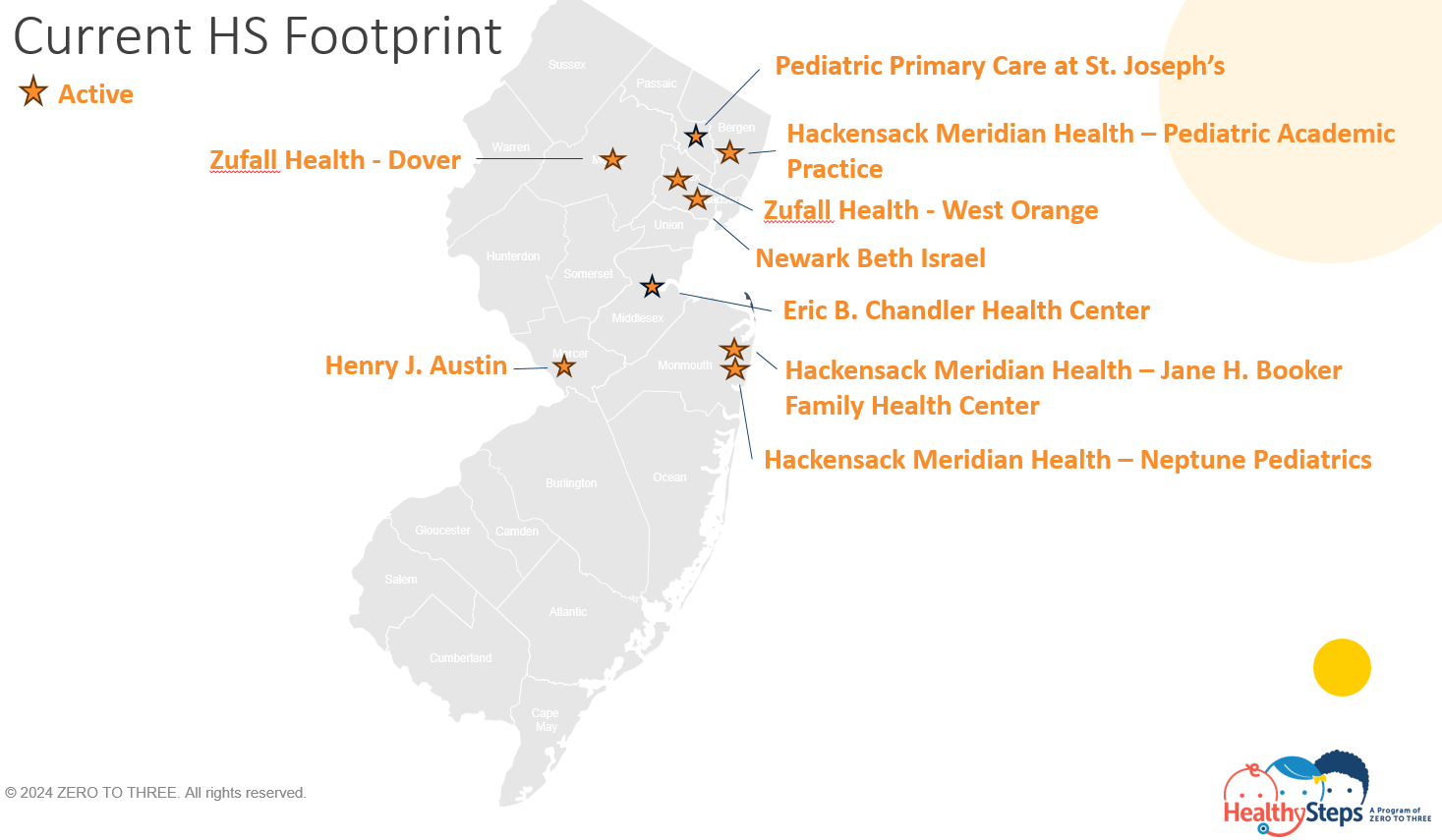
HealthySteps was first launched in New Jersey as a philanthropically‐funded initiative in 3 pediatric practices serving low‐income communities through a partnership with Hackensack Meridian Health, The Burke Foundation, The Nicholson Foundation, and the Turrell Fund. The program has since grown to 9 pediatric practices with funding as part of a federal Transforming Pediatrics in Early Childhood (TPEC) grant awarded to the New Jersey Chapter, American Academy of Pediatrics, as well as funding through the Bureau of Primary Health Care. Since 2020, over 12,000 NJ babies have benefitted from the HealthySteps program in pediatric practices located throughout the state.

Studies on HealthySteps Participants Have Shown:

  • Children were more likely to attend all of the first 10 recommended well-child visits.​
  • Children were 8x more likely to receive a developmental assessment and had significantly higher rates of developmental and other nonmedical referrals.​
  • Mothers had significantly higher rates of maternal depression referrals and were 4x more likely to receive information on community resources.
  • Mothers felt significantly more supported to breastfeed and had higher rates of continued breastfeeding. ​(longer than 6 months)​
  • Families were significantly less likely to report harsh punishment (yelling, spanking with hand) and severe discipline (face slap, spanking with objects).​
  • Families were significantly more likely to share picture books​ and play with their infants daily.
Meet Shadonae
HealthyStepsFootpringMapMay2026
Quote HS Mom2
Quote HS Tammy Murphy

While HealthySteps is remarkably affordable, at around $50-80 per child, per year, sustainable funding pathways are necessary for continued and expanded access for New Jersey families. The enhanced reimbursement is intended to support the practice with HealthySteps associated costs, including but not limited to HealthySteps services and the required HealthySteps Specialist. Enhanced reimbursement will be provided regardless of the individual level of HealthySteps service received by the NJ FamilyCare child at the office on that date of service, or during that billed pediatric primary care visit. At the present time, Federally Qualified Health Centers are not eligible for the enhanced payment.

Also, In January 2026, landmark legislation expanding access to preventive behavioral health care for children was signed into law. This new law requires Medicaid and commercial insurers to cover mental health services for children who are at risk or showing early signs of mental health challenges, before a formal diagnosis is required. New Jersey is the first state in the nation to take this important step. Under the new law, preventive services such as counseling, family guidance, and education, along with brief intervention services, can be billed to Medicaid and state-regulated commercial health plans using at-risk screening (or Z-codes), without requiring a formal psychiatric diagnosis. Prior to the law, behavioral health providers would not be reimbursed unless a child or adolescent already met criteria for a psychiatric diagnosis.
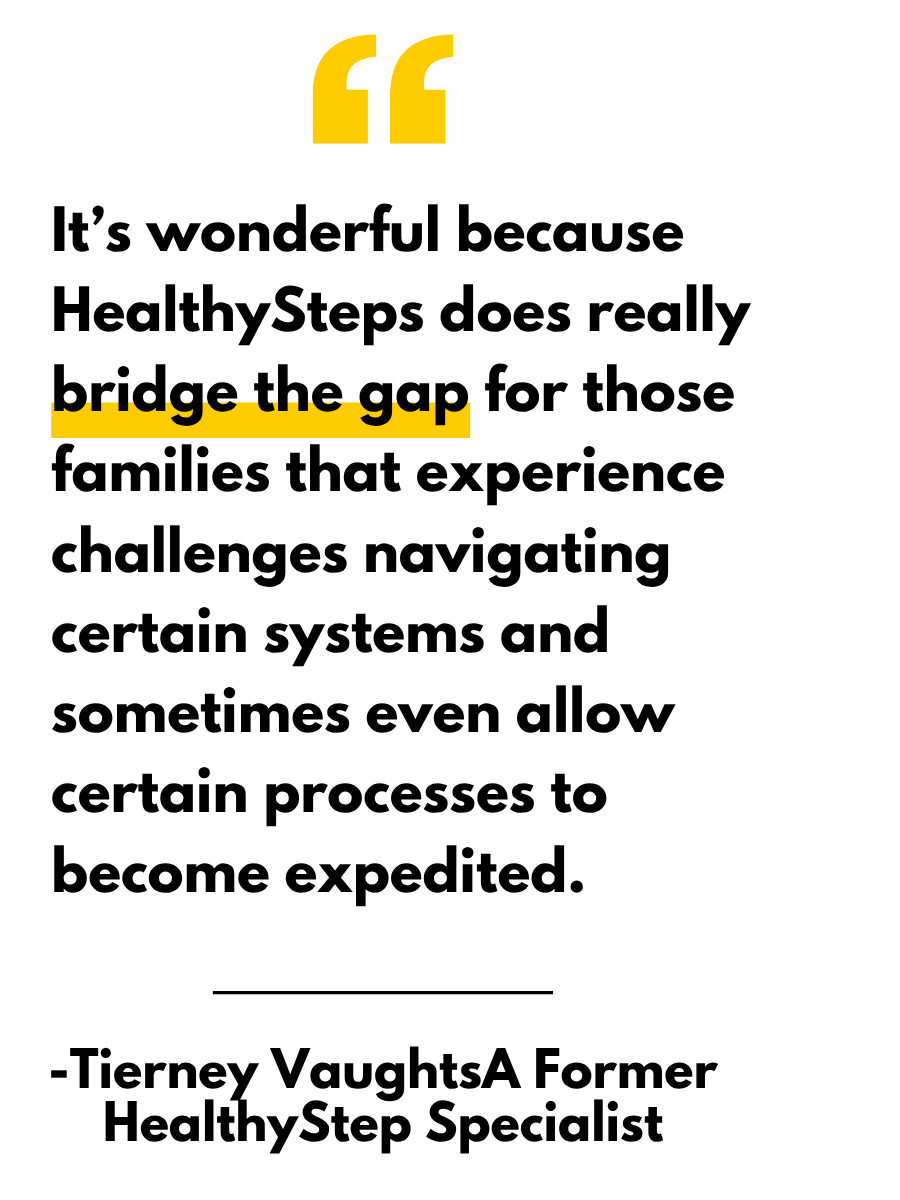
Quote HS professional

The HealthySteps National Office at ZERO TO THREE provides onboarding, training, technical assistance, and ongoing professional development for HealthySteps sites, as well as managing annual data reporting and ensuring model fidelity.  For more information, please visit the HealthySteps website or contact Pam Tew, ZERO TO THREE HealthySteps Sustainability Manager at ptew@zerotothree.org.


Our state’s future depends on healthy beginnings. Let’s demand a future where all mothers and babies thrive.

How CenteringPregnancy® Improves Outcomes for Parents and Babies in New Jersey

Posted on October 6, 2025

Authored by:
Disha Patel Headshot
Disha Patel, MPH
Manager, Health Policy
Centering Healthcare Institute

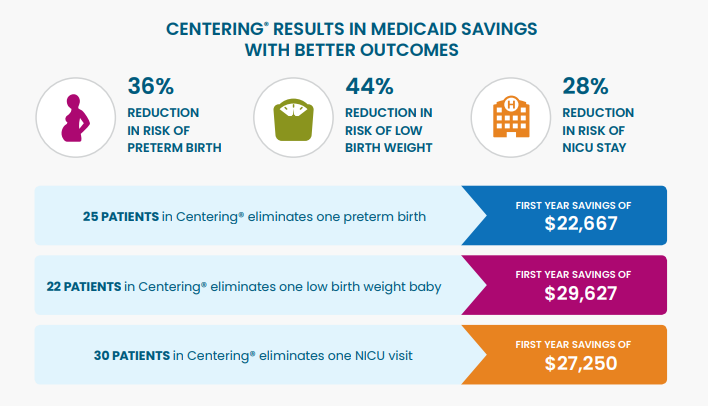
Patient-centered care prioritizes the needs of each individual. One powerful example is group prenatal care, such as CenteringPregnancy®, which has been shown to lower the risk of preterm birth, low birthweight and NICU stays. In New Jersey, we need to build greater awareness of group prenatal care and update policies to ensure all birthing people receive the high-quality care they deserve.

What is Centering?

Centering Healthcare Institute is a non-profit organization that works closely with health care providers from all sectors to transform healthcare delivery, especially regarding improving outcomes related to mothers, babies and families. With over three decades of experience as the go-to resource for group care, we have developed and sustained the evidence-based Centering model of care in nearly 500 practice sites and in some of the largest health systems in the world.

2025 election badge2

Let's make children and their
families the center of the
2025 Election Campaign.

CenteringPregnancy®

        • Facilitated, group-based medical appointments consisting of:
            • Health assessments
            • Interactive learning
            • Community building
        • Higher rates of patient satisfaction, preparation for labor and delivery
        • Improved attendance at visits and stress reduction
        • Patients have the opportunity to be heard
        • Providers have a chance to listen and evaluate patient needs
        • Reduction in racial and socioeconomic disparities in birth outcomes

Evidence

With over 200 peer-reviewed studies, Centering:

  • Reduces the risk of preterm birth by 33-47%, with further reduced risk for Black pregnant people
  • Increases breastfeeding initiation 
  • Increases likelihood of LARCs (Long-Acting Reversible Contraception) use by 70%
  • Reduces the risk of NICU admissions by 37% 
  • Reduces emergency room utilization

Centering in New Jersey

        • 24 CenteringPregnancy sites, over 500 patients served
        • More than 1 in 4 pregnant patients at NJ CenteringPregnancy sites received care through CenteringPregnancy
        • 2023 Data:
Centering New Jersey
Preterm Birth 9.9% 11.3%
Low Birth Weight 6.8% 7.98%

CHI’s Policy Recommendations

        • Increase the enhanced reimbursement rate for group prenatal care from $7 to $45 per patient per session
        • Include coverage for federally qualified health centers (FQHCs) in amended policy as FQHCs serve underserved populations, reduce barriers to care, improve birth outcomes, reduce health disparities and support financial sustainability

Why an Increase for Enhanced Reimbursement is Beneficial for NJ

        • Targets disparities
            • With the support and education that group prenatal care provides, it allows both patient and providers to address social determinants of health
        • Cost Savings for Medicaid
            • Almost half of the births being financed by Medicaid, meaning the outcomes that Centering has proven to have can translate to cost savings for Medicaid
            • Enhanced reimbursement also helps providers cover the extra time, staffing and materials needed
        • Alignment with Existing Initiatives
            • New Jersey has made significant strides in improving maternal and child health outcomes and increasing the reimbursement for group prenatal care would continue with this broader strategy. 

Call to Action

        • Invest in long-term cost savings
        • Improve maternal and child health outcomes by recognizing CenteringPregnancy as patient-centered care and closing gaps in maternal morbidity and mortality

To learn more about our models of care, expand Centering in New Jersey, and influence policy, partner with the Centering Healthcare Institute.

Join the Movement to Make Child Care a Top Priority for Our Next Governor

Posted on October 1, 2025

ACNJ leading the charge to Start Strong NJ, a campaign fighting for affordable child care for all.

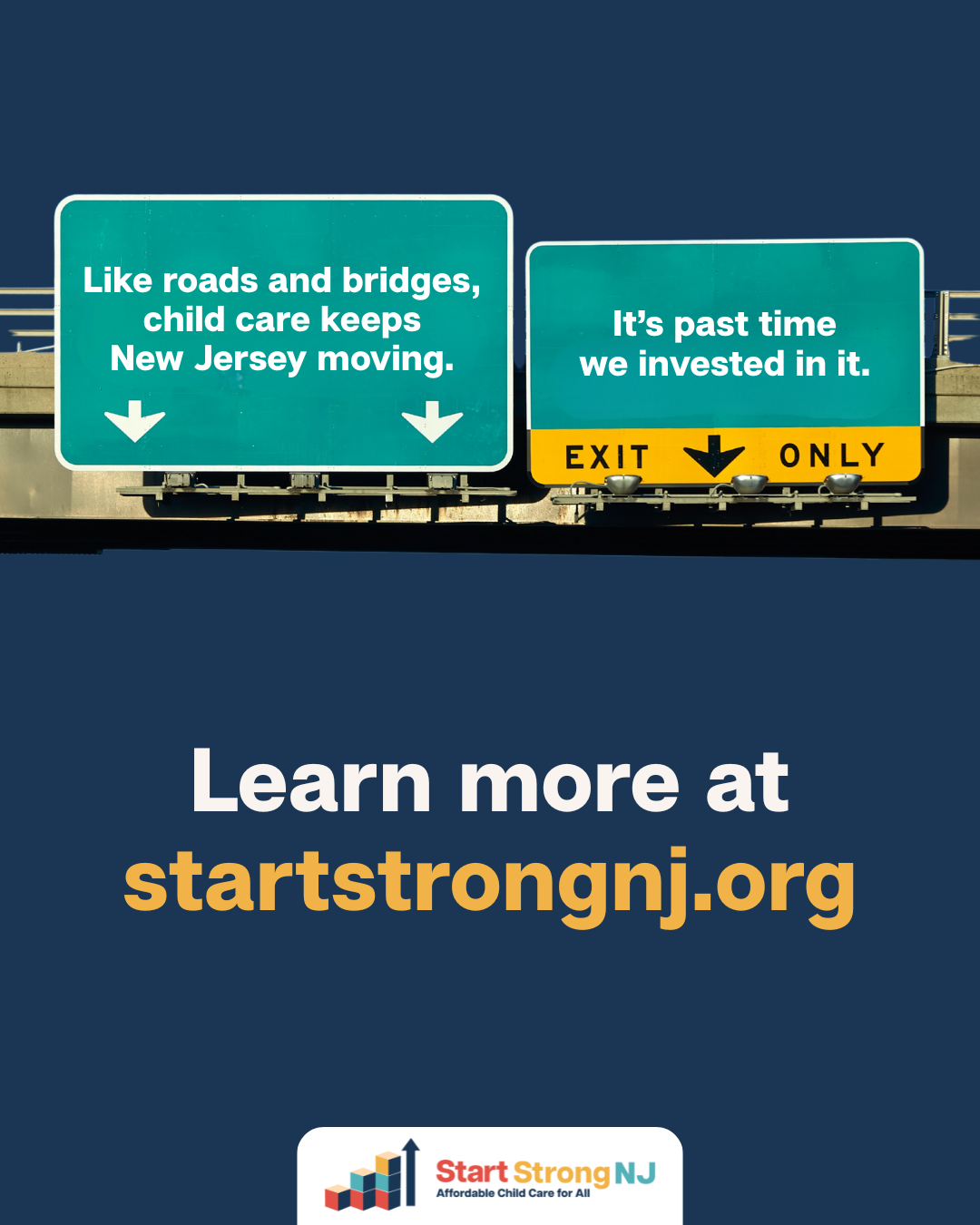
Child care has reached a breaking point. Infant care averages nearly $20,000 a year. Preschool? Almost $19,000. For many families, child care costs more than their mortgage — and, here’s the striking part, more than the average cost of in-state college tuition.

But this isn’t just a family hardship. It’s an economic problem. When parents can’t afford reliable child care, they reduce hours, turn down promotions, or leave the workforce altogether. Employers lose talent. Businesses lose productivity. New Jersey loses growth.

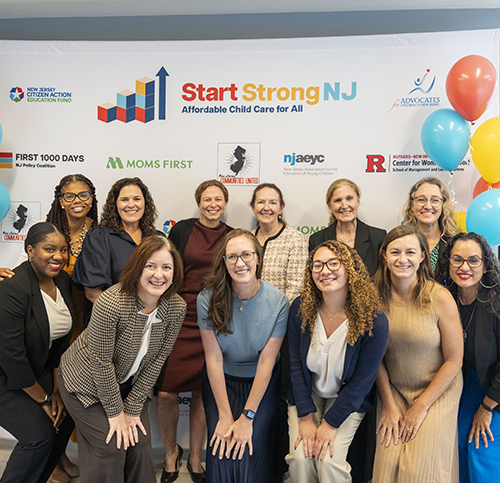
ACNJ along with the New Jersey Association for the Education of Young Children (NJAEYC) are leading the charge to Start Strong NJ, a campaign of the First 1,000 Days NJ Policy Coalition, bringing together business leaders, policymakers, providers, parents, and advocates committed to making affordable, high-quality child care available to every family in the state. The campaign’s policy agenda emphasizes affordability, a stable workforce, and lasting public investment to strengthen New Jersey’s economy and secure a strong future for children.

Here’s what else we know: If we want families to stay in New Jersey, grandparents to remain connected, and our workforce to thrive, we must treat child care as essential infrastructure.

After the November gubernatorial election, Start Strong NJ will present the new governor with a blueprint — a roadmap of actionable steps they can take in their first year. And this coalition will be the go-to resource for every question on early care and education in New Jersey.

New Jersey has a choice. We can continue patching a broken system with small fixes — or we can reimagine child care as the public good it truly is.

That means:

  • Expanding access to the Child Care Assistance Program.
  • Incentivizing employers to help cover the cost.
  • Enhancing tax credits for families.
  • Strengthening and expanding paid family leave.
  • And making bold public investments so child care teachers earn professional wages.

So the question for New Jersey’s next governor isn’t “Can we afford to invest in child care?”
The question is: “Can we afford not to?”

Because if we want a stronger economy, stronger communities, and a stronger future for our children — then bold investment in our child care infrastructure must remain a top priority for the next administration.

Start Strong NJ releases blueprint to make affordable, quality child care available to every family in the state that needs it.

Newark Kids Count Data Snapshot 2025: Maternal and Infant Health

Posted on September 30, 2025

Over the past decade, Newark has made notable progress in improving infant health outcomes, with declines in low birthweight, preterm births, and mortality rates. However, significant disparities persist, with Black, non-Hispanic residents experiencing worse outcomes. This data snapshot on Newark Maternal and Infant Health is part of a series that will zero in on issues affecting the city's children.

Placement Options in Special Education

Posted on September 25, 2025

Co-Authored by:

Lauren DeCamp
Corporate Counsel
Audible

Casey O'Brien
Corporate Counsel
Global Mile


For more information on this topic, contact Nina Peckman at npeckman@acnj.org.

As a parent of a child with special needs, understanding the various placement options available through special education can be overwhelming. Your child has a right to be educated in the "least restrictive environment" under New Jersey law (N.J.A.C. 6A:14-4.2 and 4.3). This means that, to the maximum extent appropriate, your child should be educated alongside peers without disabilities and as close to home as possible. NJ law only allows more restrictive placements, discussed below, when your student’s disability makes education in more inclusive general education settings impossible to achieve satisfactorily with reasonable accommodations and supports.

New Jersey law requires schools to maintain what's called a "continuum of placements." This means they must provide a range of educational options to meet the individual needs of students with disabilities. This approach recognizes that students with disabilities have varying needs that require different levels of support and specialized services. Your child's Individual Education Program (IEP) team, which includes the parent, must offer placement options to appropriately match your child's individual requirements with the most suitable learning environment(s).

Importantly, your child has the right to participate in multiple settings based on their individual needs. Your child's placement should be based on their IEP and must be reviewed at least annually. The school cannot remove your child from general education classes solely because they need curriculum modifications.

Here are some common terms for the placement options your child has a right to access:

  • Inclusive Setting: This is where your child learns in a general education classroom alongside students without disabilities. In this environment, your child participates fully in the general education curriculum while receiving necessary support services and modifications within the regular classroom. 
  • Push-In Services: In this model, special education teachers or specialists come directly into the general education classroom to provide support while your child remains with their peers. This might involve co-teaching or individual support within the regular classroom setting for one or more subjects or support services, allowing your child to receive specialized help without being separated from their classmates.
  • Pull-Out Services: With this approach, your child leaves the general education classroom for specific periods to receive specialized instruction in a separate resource room. This might happen for certain subjects or specific support services, after which your child returns to the general education classroom for the rest of their subjects.
  • Self-Contained: This means a special class specifically designed for students with disabilities, taught by a special education teacher. These classrooms typically have smaller class sizes and provide more intensive support.  This setting is used when students need more specialized instruction that cannot be effectively provided in the general education setting.
  • Special Education Programs: This means programs out of the student’s home district, including another district, county vocational district, rehabilitation program, medical institutions, non-public school approved for students with disabilities, non-public or out-of-state programs in special circumstances, residential, home instruction, or other settings. One of these settings may be appropriate if the district cannot offer a proper in-district program. 

In any of these settings, your child may receive various supplementary aids and services, including:

  • Curricular or instructional modifications
  • Specialized instructional strategies
  • Assistive technology devices and services
  • Teacher aides
  • Related services
  • Integrated therapies
  • Consultation services
  • In-class resource programs

To help ensure your child receives appropriate placement:

  • Actively participate in IEP meetings
  • Request detailed explanations of proposed placements
  • Review your child's progress regularly
  • Ensure decisions are based on your child's individual needs
  • Remember that your child can participate in multiple settings if needed

Consider consulting an attorney if:

  • Your child's placement decisions appear to be based on administrative convenience rather than individual needs
  • The school refuses to consider less restrictive alternatives
  • Your child is being removed from general education without proper justification

Relevant laws: