What’s New?

School Choice: What It Is and How to Access the Option

Posted on September 23, 2025

Co-Authored by:

Jack Cantrell 
Corporate Counsel
Audible

Iago Lugon
Corporate Counsel
Audible

For more information on this topic, contact Nina Peckman at npeckman@acnj.org.

New Jersey's Interdistrict Public School Choice Program provides families with educational options by allowing students to attend public schools outside their district of residence without cost to their parents. This program, which was established as a pilot program in 2000 and achieved permanent status in 2010 pursuant to N.J.A.C. 6A:12 (New Jersey Administrative Code), enables students to enroll in participating districts, known as "choice districts," that have available classroom space. For the 2026-2027 school year, there are 119 participating choice districts.

To participate in the program, students must generally be enrolled in their district of residence for at least one full academic year before applying to a choice district. However, this requirement doesn't apply to siblings of current choice students enrolling in preschool or kindergarten, or to choice students reaching their current school's terminal grade and applying to another choice district for secondary education. The application process follows a specific timeline set by the Commissioner of Education each year. For the 2026-2027 school year, the application deadline is November 24, 2025. If a choice district receives more applications than available spaces, they must conduct a public lottery to determine student selection, with preference potentially given to siblings of current choice students.

Parents interested in the program should first check if their desired district is an approved choice district by visiting the Find a Choice District webpage. They should then review their Choice District Profile for their preferred district and submit applications according to the Commissioner's timeline. The actual timeline can vary slightly for each district, but the deadline for submitting a letter of intent has historically been in November, prior to the intended school year of enrollment. It's important to note that sending districts can limit the number of their students participating in choice programs to 10 percent per grade level and 15 percent of total enrollment. If your child is denied participation or you believe the process wasn't followed correctly, you should consult with an education law attorney, particularly if your child has special needs or if you believe the denial was discriminatory.

For transportation, sending districts must provide transportation or aid in lieu of transportation for eligible choice students. Choice students can remain in their choice district until reaching the terminal grade without needing to reapply annually. However, if the program is terminated either in the choice district or statewide, enrolled students can continue until reaching their choice district's terminal grade.

For more information:
N.J.A.C. 6A:12
New Jersey Department of Education School Choice Program

Contact Information:
New Jersey Department of Education

Interdistrict Public School Choice Program
P.O. Box 500
Trenton, New Jersey 08625-0500
Email: pschoice@doe.nj.gov

The Impact of Social Media on Adolescents

Posted on September 22, 2025

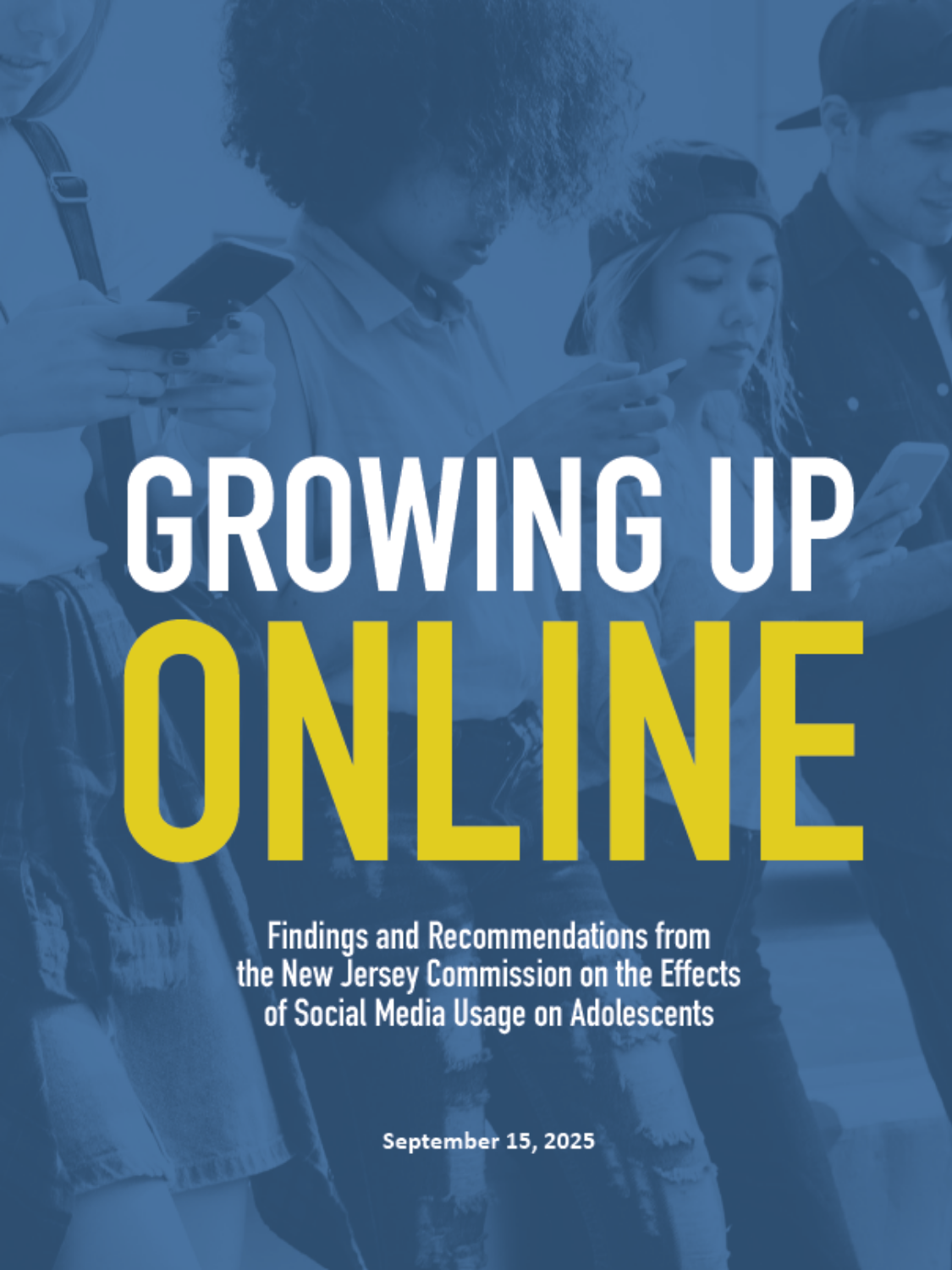
ACNJ served on New Jersey’s Commission on the Effects of Social Media Usage on Adolescents, which examined how social media impacts young people. The Commission published recommendations aimed at preserving social media’s benefits while reducing potential harms – including banning cellphones at school and delaying social media access until age 16.

GrowingUpOnline

The Business Case for Efficient and Effective Child Care Investments

Posted on September 22, 2025

Authored by:
Althea Ford
Vice President of Government Affairs, New Jersey Business & Industry Association

Investment in early childhood education is an economic imperative, allowing working parents and caregivers to engage the workforce knowing that their children are in safe, age-appropriate, high-quality educational environments. 

The business community has a vested interest in ensuring a robust and diverse child care system, inclusive of an early childhood education system for infants and toddlers and a care infrastructure for school-aged children, i.e., before and aftercare programs, summer camps, etc. Child care providers that cater to these youths offer a vital service to working parents and families with young children, ensuring access to quality and reliable care so that working parents can literally show up for work every day and continue to contribute to the state’s economic growth.

2025 election badge2

Let's make children and their
families the center of the
2025 Election Campaign.

Child care is also a business. These small businesses, many of which are minority- and woman-owned, contribute significantly to our state’s economy and local tax base. Additionally, much of the child care workforce is comprised of women who are disproportionately affected by child care considerations. 

With approximately $1 billion invested in child care over the last several years, there is a signal that the state legislature and governor see this as a critical issue. Yet, there have also been programs implemented that threaten the short-term and long-term success of this sizable investment.  

One such example is state-funded preschool. While well-intentioned, continued operation and expansion of this program in its current iteration will continue to have significant fiscal and operational ramifications for licensed and community-based child care providers, and threatens an already fragile system. 

The state must prioritize using the existing infrastructure of childcare providers to ensure effective deployment of resources (facilities and taxpayer dollars) and reject efforts that harm private providers. With a holistic and integrative approach, New Jersey can realize the benefits of preschool expansion while ensuring that working families have access to the care they need for children at all stages of their development.

Public Testimony on Proposed Low-Income Housing Tax Credit Qualified Allocation Plan, PRN 2025-087

Posted on September 19, 2025

Winifred Head Shot2

Winifred Smith-Jenkins
Director of Early Learning Policy and Advocacy

To: New Jersey Housing and Mortgage Finance Agency (NJHMFA)

From: Winifred Smith-Jenkins, Ed. D, Director of Early Learning for Policy and Advocacy

Date: August 21, 2025

RE: Proposed Low-Income Housing Tax Credit Qualified Allocation Plan, PRN 2025-087

Good morning, Chair and members of the New Jersey Housing and Mortgage Finance Agency. My name is Winifred Smith-Jenkins, and I serve as the Director of Early Childhood Policy and Advocacy at Advocates for Children of New Jersey. Our statewide nonprofit has spent more than 45 years working to make New Jersey a better place to grow up. Thank you for the opportunity to comment on the proposed Qualified Allocation Plan. I am here to talk about why housing policy and child care policy must be part of the same conversation — and why the decisions you make today can transform outcomes for children, parents, and entire communities.

In New Jersey, child care refers to the care and supervision of children from birth through age 13. Just as you cannot leave a 4-month-old infant at home alone, you also cannot leave a 7-year-old unattended. Children of all ages need safe, reliable environments that not only protect their well-being but also stimulate their minds and support their growth. High-quality child care provides exactly that — giving parents the peace of mind to pursue their personal and professional goals, while ensuring children are nurtured, engaged, and prepared to thrive.

Child care is not just babysitting. It is the daily work of caring for and educating young children in settings that meet state safety and quality standards, so parents can work, attend school, or train for better jobs. In New Jersey, there are two primary types: home-based care, provided by registered family child care providers serving three to five children, and center-based care, licensed programs serving six or more children in purpose-built facilities with trained staff. High-quality child care is where early brain development meets workforce stability — it is essential infrastructure for a modern economy.

The benefits are profound. Decades of research show that high-quality child care builds strong foundations for learning, social-emotional growth, and healthy development. It closes achievement gaps before they start, particularly for children from low-income households, and it pays for itself many times over. Nobel laureate economist James Heckman’s research shows a 13% annual return on investment through better education outcomes, higher earnings, and reduced costs in social services, healthcare, and the justice system. For parents, access to reliable child care is the difference between holding a steady job and cycling in and out of work. For employers, it means a dependable workforce. For communities, it is a pathway out of poverty that benefits generations.

And yet, despite its importance, New Jersey’s child care system is in crisis. We lack licensed capacity for 73% of infants and toddlers likely to need care. Forty percent of our municipalities are child care deserts. Infant care costs more than $21,000 a year — higher than tuition at many of our public colleges. This is not just a shortage; it is a market failure. It costs providers more to deliver quality care — because of low child-to-staff ratios, strict safety requirements, and the need for skilled educators — than families can afford to pay. This is where housing policy can be part of the solution. The best place for child care is close to the families it serves. When we embed child care in or near affordable housing, we remove a major barrier for parents who no longer have to juggle long commutes or multiple drop-offs. We expand the supply by creating purpose-built space in new developments. We create local jobs — child care centers employ teachers, aides, cooks, and administrators, many of whom may live in the very housing where the center is located. And we stabilize communities — children get quality early learning, parents keep steady jobs, and dollars circulate locally.

Other states have recognized this. California and the Federal Home Loan Bank of San Francisco award competitive points for projects with on-site licensed child care. These incentives don’t just create convenience — they expand the actual number of child care slots. Here in New Jersey, the current Qualified Allocation Plan acknowledges the importance of proximity to child care, awarding points for projects near licensed centers or for offering social services that could include child care. But as written, these provisions only increase competition for a limited supply; they do not create new capacity.

We can do better. I urge NJHMFA to adopt two targeted changes that will have lasting impact:

  1. Award three points for family-cycle developments that provide finished, licensable ground-floor space for child care — with capacity for at least two children per ten housing units, plus dedicated outdoor play space — leased at nominal cost to licensed providers.
  2. Require all new two- and three-bedroom units to meet the modest additional requirements for registered family child care. This would allow residents to become licensed providers, building both capacity and income within the community.

Consider this: A mother in Burlington is raising two young children — a 6-month-old and a 2-year-old — on her own. After years of striving, she’s offered a full-time job with benefits, the kind of opportunity that could change everything. But instead of relief, she feels panic. There is no affordable child care nearby. Taking the job would mean cobbling together unreliable care arrangements with neighbors or relatives. Faced with that choice, she is ready to turn down the very opportunity she has been working toward.

Now imagine that same mother just a few months later. A new affordable housing development opens in her neighborhood — and inside that very building is a high-quality child care center. Throughout the development, registered family child care providers operate from their homes. Suddenly, everything changes. She can walk her children just steps from her apartment to safe, nurturing care. She takes the job, moves off public assistance, and begins building a career. Her children are thriving, and the cycle of opportunity has begun.

This does not have to be a fantasy. This is what happens when we connect the dots between housing and child care. We don’t just provide families with shelter — we give them stability, support, and opportunities to build a better life. We don’t just change addresses; we change futures.

That is why I urge you to strengthen the Qualified Allocation Plan by making child care part of the housing conversation and the housing solution. I also welcome the opportunity to work with NJHMFA staff to support the integration of child care into new tax-credit financed housing developments.

Housing is the foundation for stability. Child care is the bridge to opportunity. Together, they give families the security and tools to thrive. You have the power to ensure that when we build affordable housing in New Jersey, we are not just giving families a roof over their heads — we are giving them the supports they need to work, to learn, and to raise children who will succeed in school and in life.

Thank you for your time and for your leadership on behalf of New Jersey’s families.

“Parenting Is Easy!” …Said No New Parent Ever!

Posted on September 15, 2025

headshot-diane

Diane Dellanno
Senior Policy Analyst
Early Childhood


For more information on this topic, contact Diane at ddellanno@acnj.org

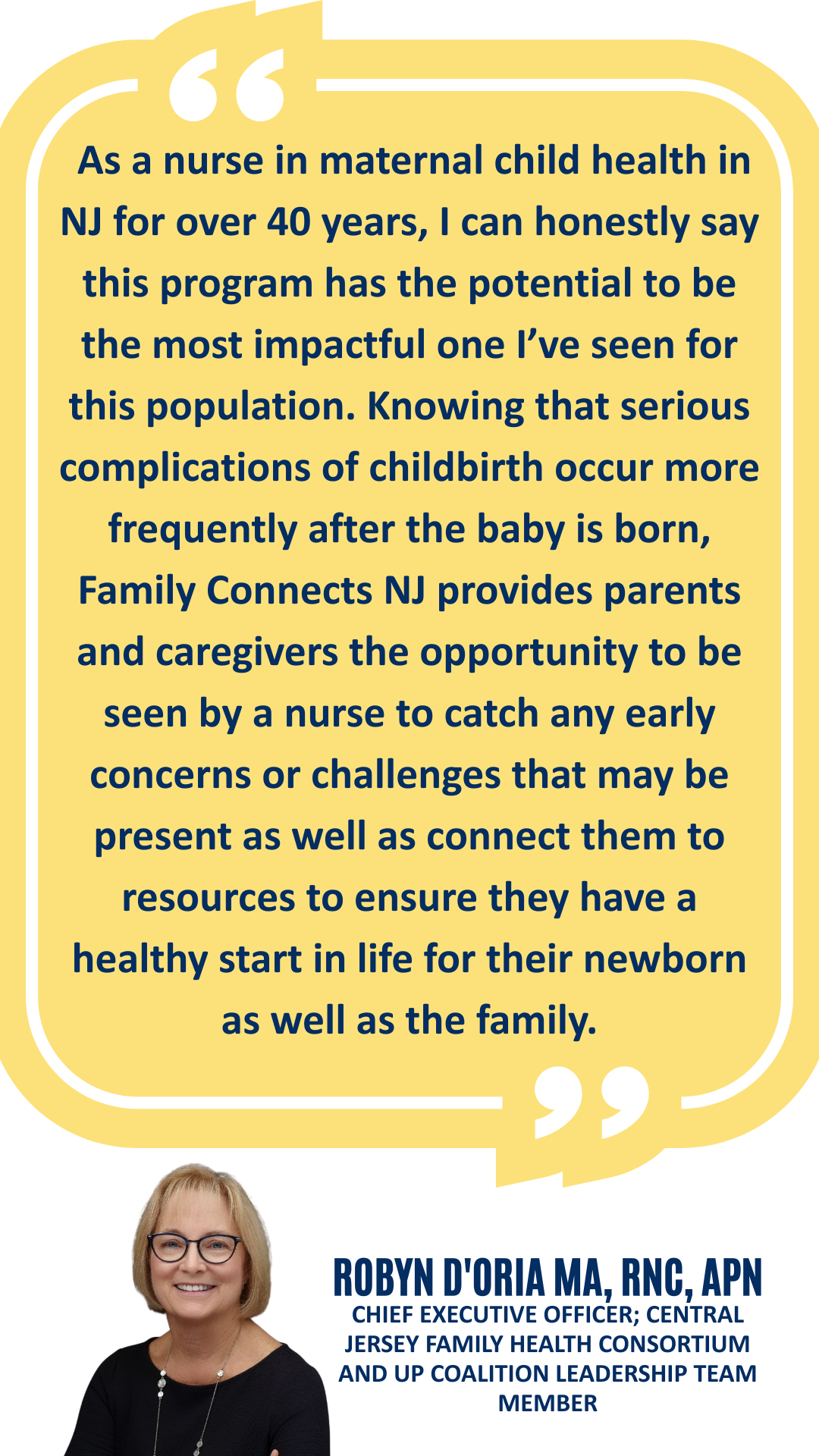
Anyone who is a parent, or knows someone who is a new parent, understands that all parents of newborns could use a little extra support when they welcome the newborn into their lives. Fortunately, in New Jersey, thanks to a fairly new program known as Family Connects NJ, parents of newborns — whether through birth adoption, as a resource parent, or as a kinship caregiver — can now receive the support they may need as they navigate the challenges, joys, and adjustments of parenthood. 

Red And Blue Modern Breaking News Instagram Story (3)

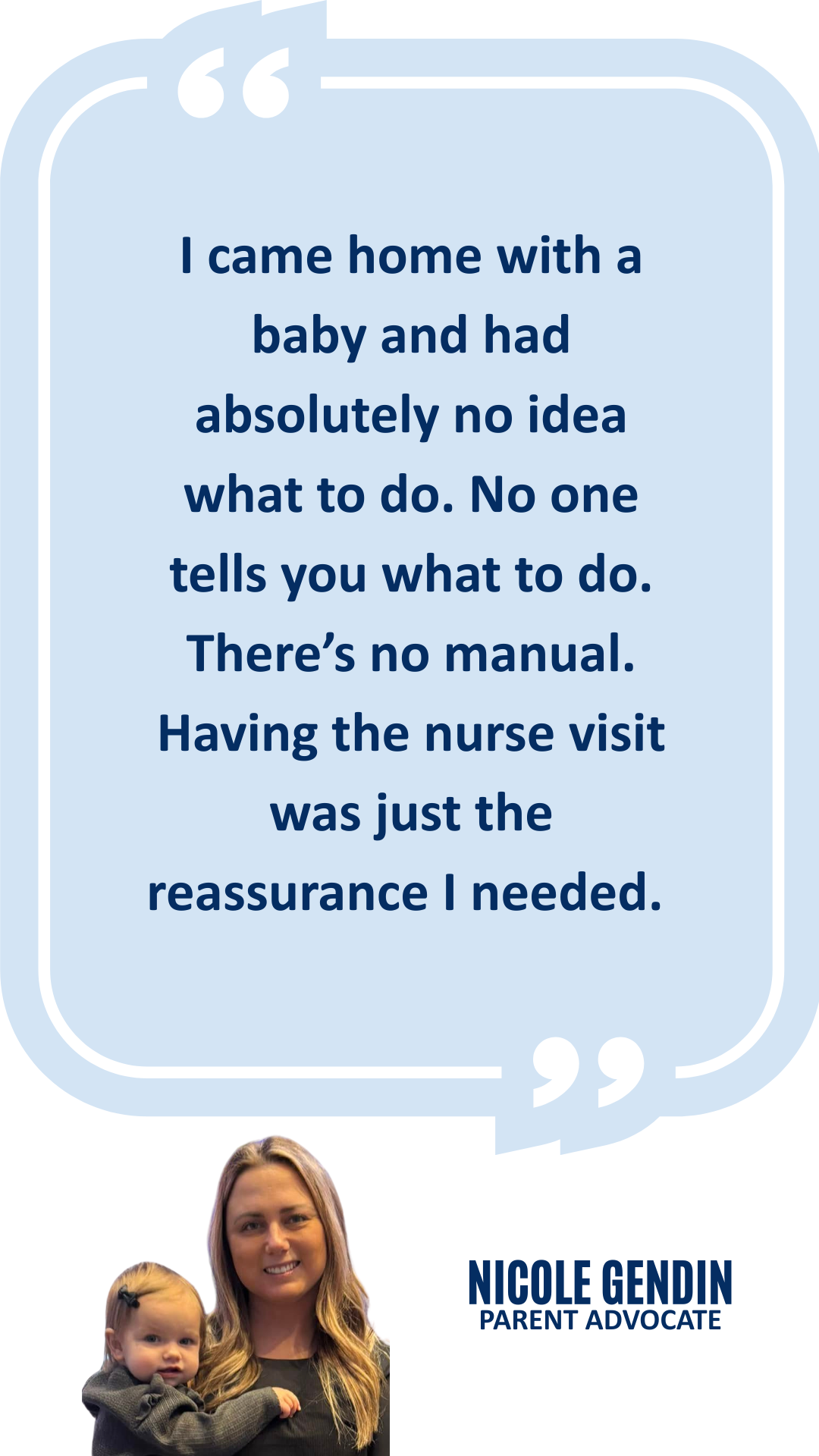
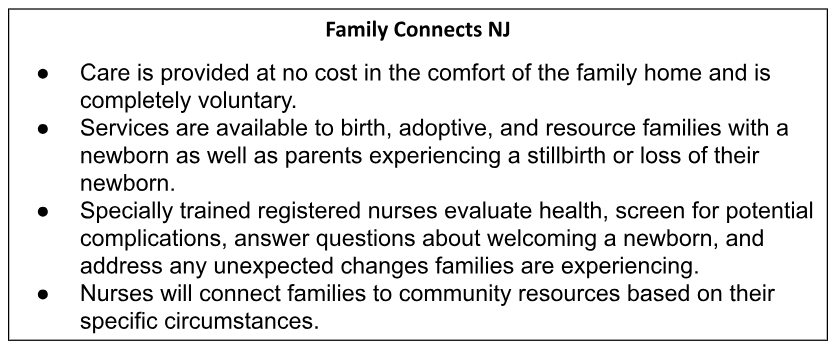
Family Connects NJ is an evidence-based, voluntary, universally offered support program for ALL families. The program connects parents with a specially trained nurse for a personalized follow-up visit at home within the first two weeks after their child’s birth. During the Family Connects NJ visit, the nurses assess the health of both the parents and the newborn, screen for potential complications, and answer questions about their newborn, such as feeding and sleeping concerns.  They also connect parents to community resources based on their specific needs. 

Screenshot 2025-09-15 172017

Universal in-home nurse visitation, as provided by Family Connects NJ, is an essential part of the program to help address maternal health concerns in NJ during the postpartum period.  Although The American College of Obstetricians and Gynecologists (ACOG) recommends that all women have contact with their OB/GYN or other clinician within the first three weeks postpartum, most women in the US traditionally have their first postpartum visit between four to six weeks after delivery. As many as 40% of mothers do not attend a postpartum visit, and attendance rates at postpartum appointments are even lower among those with limited resources, such as unstable housing, communication challenges, or transportation barriers. Maternity care deserts, and a lack of coordinated postpartum follow-up contribute to preventable complications and poor outcomes.

Research on the Family Connects model has demonstrated significant benefits for families including:

      • Healthier Starts for Babies: 50% fewer emergency room visits and overnight hospital stays in the first year
      • More Confident and Calmer Mothers: 30% lower likelihood of postpartum depression or anxiety
      • Stronger Child-Parent/Caregiver Bonds: Increased hugging, comforting, and reading, leading to greater responsiveness to infants’ needs
      • Safer, More Nurturing Home Environments: Families implemented simple changes to enhance safety, stimulation, and care for their babies
      • Improved Postpartum Care: More mothers attended their 6-week postpartum health check
      • Better-connected Families and Thriving Communities: Families discovered more local resources and support, with a 15% increase in community resource engagement

NJ is already seeing similar program benefits as reported in a recent NJ Spotlight article.  Among families served thus far, three in four families visited were referred for additional support services and 17% required follow-up medical attention.

Family Connects NJ is currently available in 11 counties: Bergen, Cumberland, Essex, Gloucester, Hudson, Middlesex, Mercer, Ocean, Passaic, Somerset, and Sussex. Since the program began in January of 2024, over 5,000 families have completed a home visit (NJ Department of Children and Families, September, 2025). The program will be expanded in January of 2026 to include Atlantic, Burlington, Camden, Cape May, Monmouth, and Salem counties. It will be available statewide as of January 2027, when the final counties of Hunterdon, Morris, Union, and Warren will be added.

Red And Blue Modern Breaking News Instagram Story (1)

To learn more about Family Connects NJ or schedule a visit, please explore Family Connects NJ.