Watch the webinar above to learn more about how child care and afterschool providers can serve free meals through CACFP, regardless of the poverty level of the community in which the program is located. Through the Child and Adult Care Food Program (CACFP), more than 4.2 million children receive nutritious meals and snacks each day as part of the child care they receive.
Webinar Segments:
Welcome/Introduction – The COVID-19 Pandemic Impact on Children’s Nutritional Needs and Child Care
Discussion on the Economic Impact on Child Care During the Pandemic - ACNJ
The Ongoing and Urgent Importance of CACFP – Hunger Free New Jersey
Once again, our president and CEO, Cecilia Zalkind, joins prestigious leaders from around the state in Insider NJ's annual Insider 100 Policymakers. This list recognizes individuals who have made and are expected to make impactful policy moves for New Jersey. This year, Ceil has ranked 53rd for her positive influence in motivating parents, advocates, and policymakers to advocate for the well-being of all children throughout the Garden State. Congrats, Ceil!
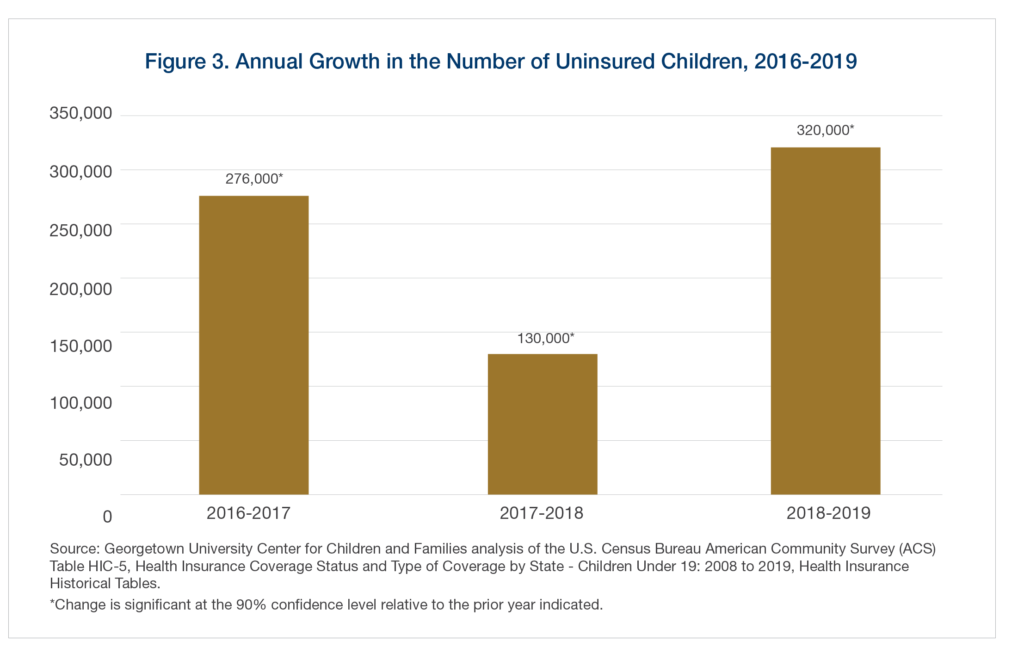
The Georgetown Center for Children and Families released a report today bringing attention to the increase in the number of uninsured children across the county. While the data included in the report is pre-pandemic, their concern is that the uninsured rate will continue to rise as unemployment numbers continue to increase and temporary layoffs due to COVID-19 shut downs become permanent. Data in the report, regarding New Jersey, showed an increase in the child uninsured rate, but it was below the national average. It also shows that the uninsured rate for Hispanic/Latino children under 19 was 6.8 percent compared to New Jersey’s overall uninsured rate of 4.3 percent.
According to the report, states that did not expand Medicaid through the Affordable Care Act are falling further behind with respect to covering children, with the uninsured rate for children living in those states at almost double that of children living in states that have expanded Medicaid as of 2019. Thankfully New Jersey elected to adopt the Medicaid expansion under the former Christie administration. This allowed low-income families to seek coverage through NJ FamilyCare, as well as low-income, single childless adults.
New Jersey, through a bi-partisan public-private partnership significantly reduced its uninsured rate, especially among children. That said, there are still many children in New Jersey who are likely eligible for health insurance but do not receive it. So we all need to remind neighbors, friends and family members who may be losing a job about NJ FamilyCare, New Jersey’s affordable public health insurance program for individuals earning up to $1,468 a month or a family of four earning up to $3,013 per month. Visit www.njfamilycare.com for more information and to apply for coverage.
The federal Families First Coronavirus Response Act which provided the state with additional federal Medicaid matching funds for the duration of the public health emergency, required in part, that state not terminate beneficiaries’ Medicaid eligibility through the duration of the crisis, except in certain circumstances. As of September 2020, there are 1,853,928 people enrolled in NJ FamilyCare including 827,510 children under age 19, compared to 1,687,984 individuals enrolled as of September 2019, including 777,888 children.
We all know that children who have health coverage receive more consistent preventive care and treatment for any chronic conditions. This avoids expensive emergency room care, saving taxpayer dollars. Getting and keeping kids insured helps our state spend scarce dollars wisely.
When children are healthy, they are more likely to grow and learn. NJ FamilyCare is among the most cost-effective government programs. The state’s investment is a partnership with the federal government that brings federal dollars into the state.
You can help. If you know of parents who do not have health insurance, encourage them to either visit the FamilyCare website at www.njfamilycare.org or to call 1-800-701-0710 to find out if they are eligible. The application is available and can be completed online.
Voting in the 2020 election is already happening across New Jersey right now! With voting by mail available to all New Jersey voters, casting your ballot is easier than ever before.
Children can't vote, so we need to make sure their issues are represented in the election. In addition to the Presidential election, New Jersey is also holding elections for all our House Representatives, one of our Senators, and many county and local officials.
Information on New Jersey's upcoming election can be found at the NJ Secretary of State's 2020 Elections #NJVotes website.
Important Information
Register to vote online or apply with a paper application with your county election office, if you haven't already. Voter registration closes on October 13, 2020.
Governor Murphy just signed the $32.7 billion FY2021 New Jersey budget into law, which covers all planned spending between October 1, 2020 through June 30, 2021. This year’s budget process was an unusual one and the pandemic made public input difficult. Despite these obstacles, there is some good news for kids in FY2021.
What’s in the budget for kids
The budget evolved since it was first proposed by the Governor on August 25th. Here are some of the significant changes that impact children:
Additions:
Expansion of the state’s Earned Income Tax Credit (EITC) to include more young adults,
$10 million for preschool expansion,
$25 million in extraordinary special education funding for school districts,
$3 million to school lunch aid to make meals free for more students, and
$5 million to the lead hazard remediation fund.
Restored funding from August 25th budget cuts:
$1.75 million for the child collaborative mental health care pilot,
$15 million for school-linked services,
$1.5 million for the child advocacy center multidisciplinary team, and
$3 million for family support services.
Cuts to the August 25th budget:
The Governor’s “baby bonds” proposal, giving eligible families with children a $1,000 nest egg, was removed.
The budget also includes $250 million in federal dollars to address child care during the pandemic, including $150 million in tuition assistance for school-aged children (ages 5-13).
ACNJ would like to thank Assemblywoman Yvonne Lopez and Senator Joseph Vitale for their efforts to pass a budget resolution to set aside $3 million to help increase infant-toddler child care in communities with few options. Although the resolution did not pass, this was an important step to address the shortage of quality child care for our youngest children. As New Jersey begins to plan the next budget, ACNJ will make sure the voices of children and families are heard.