
Posted on April 13, 2026



By Keith Hadad
ACNJ, Staff Writer
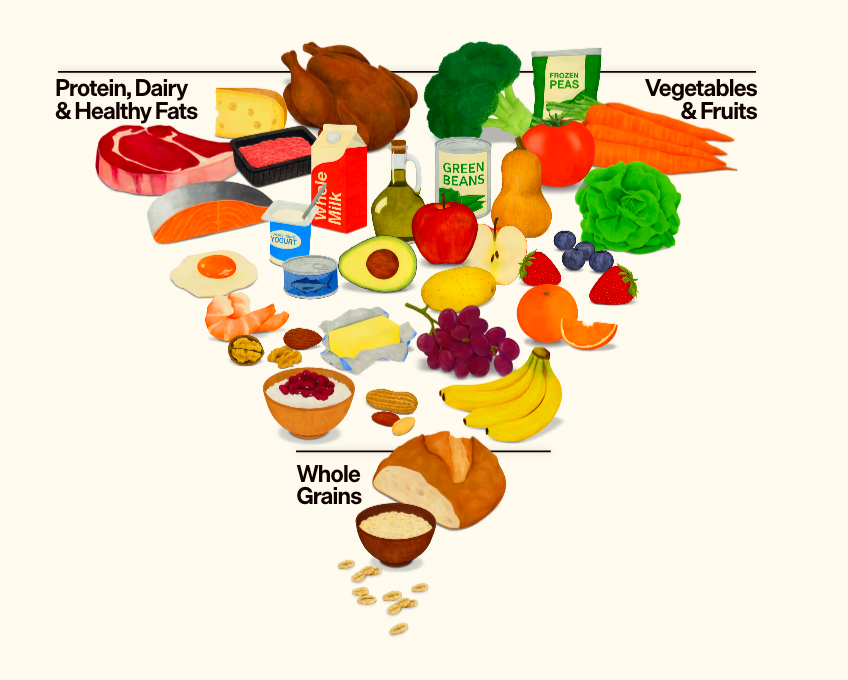
Earlier this year, the USDA and HHS announced new Dietary Guidelines for Americans, along with an updated food pyramid. These changes, represented by an upside-down pyramid, emphasize protein intake, recommend full-fat dairy options, and encourage limiting highly processed foods and added sugars. These guidelines govern nutritional standards for school meals and to a lesser extent, the federal Supplemental Nutrition Assistance Program (SNAP), which feed 27.2 million students every day and provide food assistance to 42.6 million people throughout the US. While the logistics and guidance are still in flux, the recent DGA updates will eventually create significant shifts in how the nation’s students and underserved eat. But how did we get here?
History of Federal Dietary Guidelines
First introduced in 1980, the Federal Dietary Guidelines for Americans have shaped national nutrition policy and standards for generations. Updated every five years by the USDA and HHS, these guidelines provide the policy and scientific basis for federal food assistance programs, including school meals and SNAP benefits. In 1992, the USDA introduced the Food Guide Pyramid, its first widely accepted graphic to illustrate a healthy diet. The Pyramid, with grains at the base and fats and sweets at the top, was designed to communicate recommended daily servings and reinforce the Dietary Guidelines.
Over the years, the government’s nutritional guidelines and the Pyramid itself have evolved in response to the nation’s changing needs and our expanding understanding of nutritional science, thereby directly shaping school meal standards.
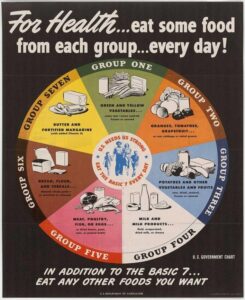
The origins of the Food Pyramid as we know it today began in the 1940s. In 1943, in an effort to help Americans maintain a healthy diet while rationing for the war, the USDA released “The Basic 7,” which grouped sections of fruits, vegetables, meat, dairy, and other foods into a wheel.
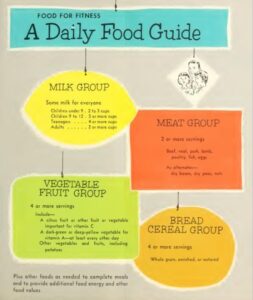
By 1955, researchers at the Harvard School of Public Health condensed the 7 food groups into The Basic Four, which was adopted by the USDA. While being one of the federal government’s early attempts at messaging about tying diet to national stability, this and the guide that came before it lacked recommendations for appropriate choices of sugars, fats, and overall calorie intake.
 In 1977, the first edition of the Dietary Goals for the United States was released, which was the first set of government guidelines that drew a connection between diet and major chronic diseases. The USDA and HHS (then known as the Department of Health, Education, and Welfare) formed a Joint Coordinating Committee in 1978 that voluntarily assembled a task force of scientists from both agencies to create nutrition guidance for the public. Their goal was to reflect current understandings of how diet relates to health and disease.
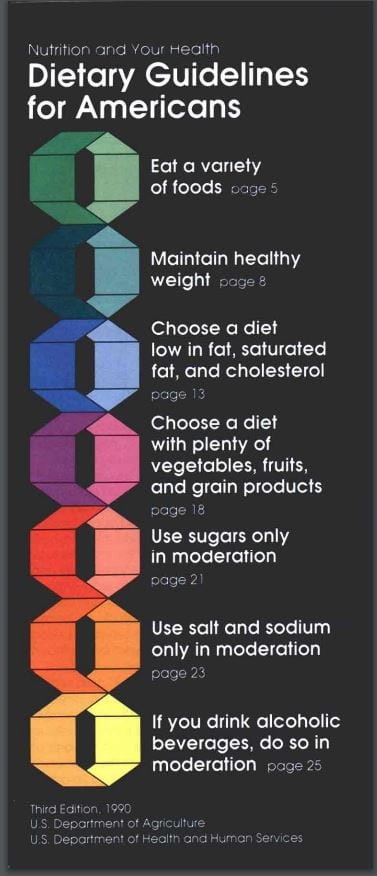 After reviewing evidence from sources such as the Surgeon General’s Report on Health Promotion and Disease Prevention, the American Society for Clinical Nutrition, and other scientific organizations, the task force presented its findings as the 1980 Dietary Guidelines for Americans, based on the prevailing scientific consensus about nutrition and its impact on health. From this point forward, the national Dietary Guidelines would be updated every five years, and this became law in 1990 with the passage of the National Nutrition Monitoring and Related Research Act. This law also requires all federal nutrition programs, including school meals, to be consistent with these nutritional guidelines.
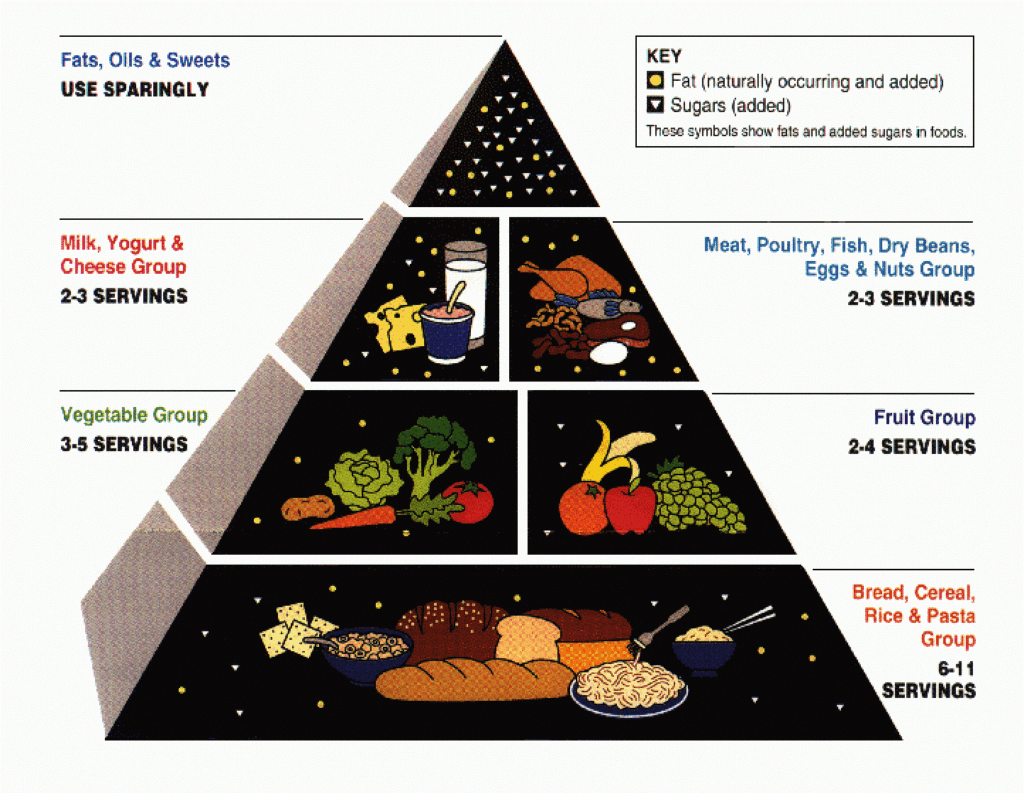 In 1992, the Food Pyramid that we are all familiar with was introduced to visually communicate recommended servings of the major food groups and to translate nutrition science into a public education tool. The 1995 edition of the DGAs was revised to align with information from the Food Guide Pyramid and the Nutrition Facts Panel. The report also strongly stressed the importance of regular physical activity for maintaining a healthy body weight.
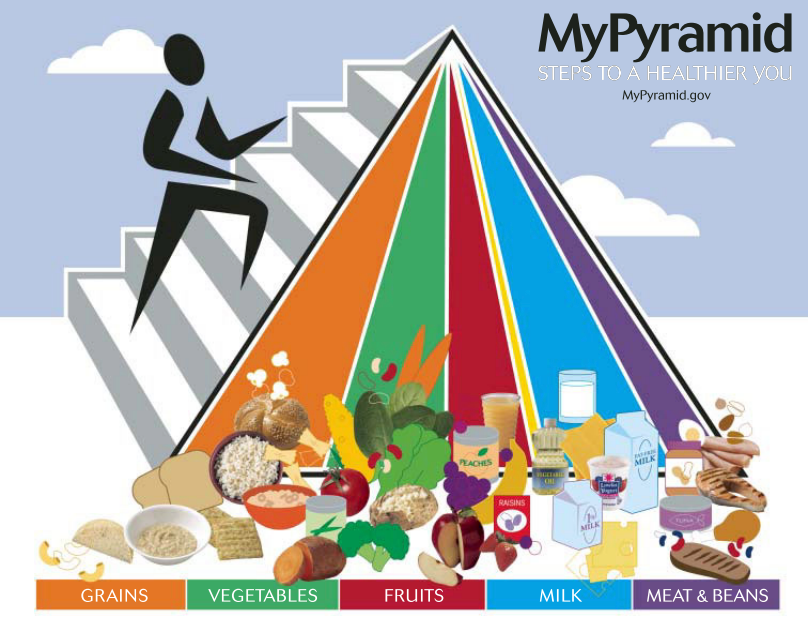 The Food Guide Pyramid then evolved into MyPyramid in 2005, which, with its tagline “Steps to a Healthier You,” further emphasized the importance of physical exercise by depicting a figure scaling the side of the pyramid.The bricks of the pyramid were changed into vertical wedges of color to reflect the DGA’s updated food patterns.
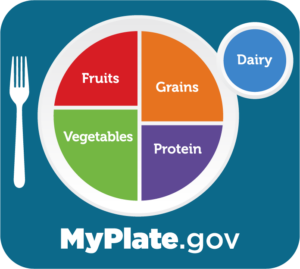 MyPyramid was then replaced in 2011 by First Lady Michelle Obama with a simpler graphic, known as MyPlate. MyPlate was a circular diagram split into two halves: one dedicated to whole fruits and varied vegetables, and the other to grains and diverse protein sources, with dairy placed on the side.
The newest changes to the Dietary Guidelines brought major alterations, perhaps most evident in the MyPlate graphic being replaced by an inverted pyramid, with protein, whole dairy, and healthy fats on top, and grains moved to the bottom region.
The Impact on School Meals
For schools to receive federally funded free or low-cost meals through programs such as the National School Lunch Program or the School Breakfast Program, they must comply with the Dietary Guidelines for Americans. A USDA study found that school meals can often be one of the most nutritious sources of food for students. However, improvements are still needed. The DGA indicates that roughly 70–80% of school-aged children consume excessive amounts of added sugar. Similarly,a USDA study found that over 90% of students regularly exceed recommended sodium levels. These gradual changes in the new guidelines aim to improve children’s health and produce meaningful long-term benefits, such as reducing the risk of diet-related conditions like diabetes and high blood pressure.
The process of developing and implementing these regulations can often span several years, so these updates cannot be rolled out overnight. The USDA must first introduce proposed rules, open them up for public feedback, finalize the regulations, and then allow schools and food providers time to modify recipes and comply with the updated standards. Not all schools have the right equipment, conditions, or trained staff to prepare enough scratch meals to meet these new standards and the needs of their students. A survey released by the School Nutrition Association showed that 79% of school meal program directors nationwide have an urgent need for increased funding to expand scratch cooking and reduce ultraprocessed foods. So schools will have to wait for guidance from the USDA on exactly how to implement the changes necessary to meet the new dietary guidelines.
SNAP
Currently, the Dietary Guidelines for Americans influence SNAP primarily by guiding nutrition education, program improvements, and policy discussions, rather than directly restricting purchases. SNAP-Ed uses the DGA to promote healthier eating habits, while the guidelines also shape initiatives that encourage the purchase of more nutritious foods, such as fruits and vegetables. Although SNAP benefits can still be used for most foods, the DGA continues to inform ongoing debates about incentives and potential restrictions.
Under the leadership of President Trump, the USDA is now allowing states to exercise greater program management by approving SNAP Food Restriction Waivers. These waivers can make non-nutritious items, such as soda and candy, ineligible for SNAP benefits. As of last year, some states, like Nebraska, have removed soda and energy drinks from SNAP, and more changes are expected to follow.
The Dietary Guidelines for Americans and the Food Pyramid have grown and evolved alongside our understanding of nutritional science over the years, and both will assuredly continue to change far into the future. As the new Dietary Guidelines are slowly phased in and further guidance is issued by the USDA, ACNJ will continue to monitor these changes and how they affect programs such as SNAP and the National Lunch and School Breakfast programs.
While I like all the history, wondering how we might put something about the impact of the guidelines on school meals and SNAP right at the beginning of the blog