Posted on February 19, 2026

Start Strong NJ releases blueprint to make affordable, quality child care available to every family in the state that needs it.
Before an audience of dozens of New Jersey legislators, Start Strong NJ unveiled its Blueprint for Affordable Child Care. The event featured Lt. Governor Dale Caldwell and a discussion between Steve Adubato and Senate Majority Leader Teresa Ruiz. All speakers shared a unified message: child care must be a top priority for our state’s future.
The report's comprehensive recommendations are based on three guiding principles:
- Child care must be affordable and accessible for every family that needs it.
- Early childhood educators must be compensated and supported as the professionals they are.
- Child care must be recognized and funded as essential economic infrastructure.
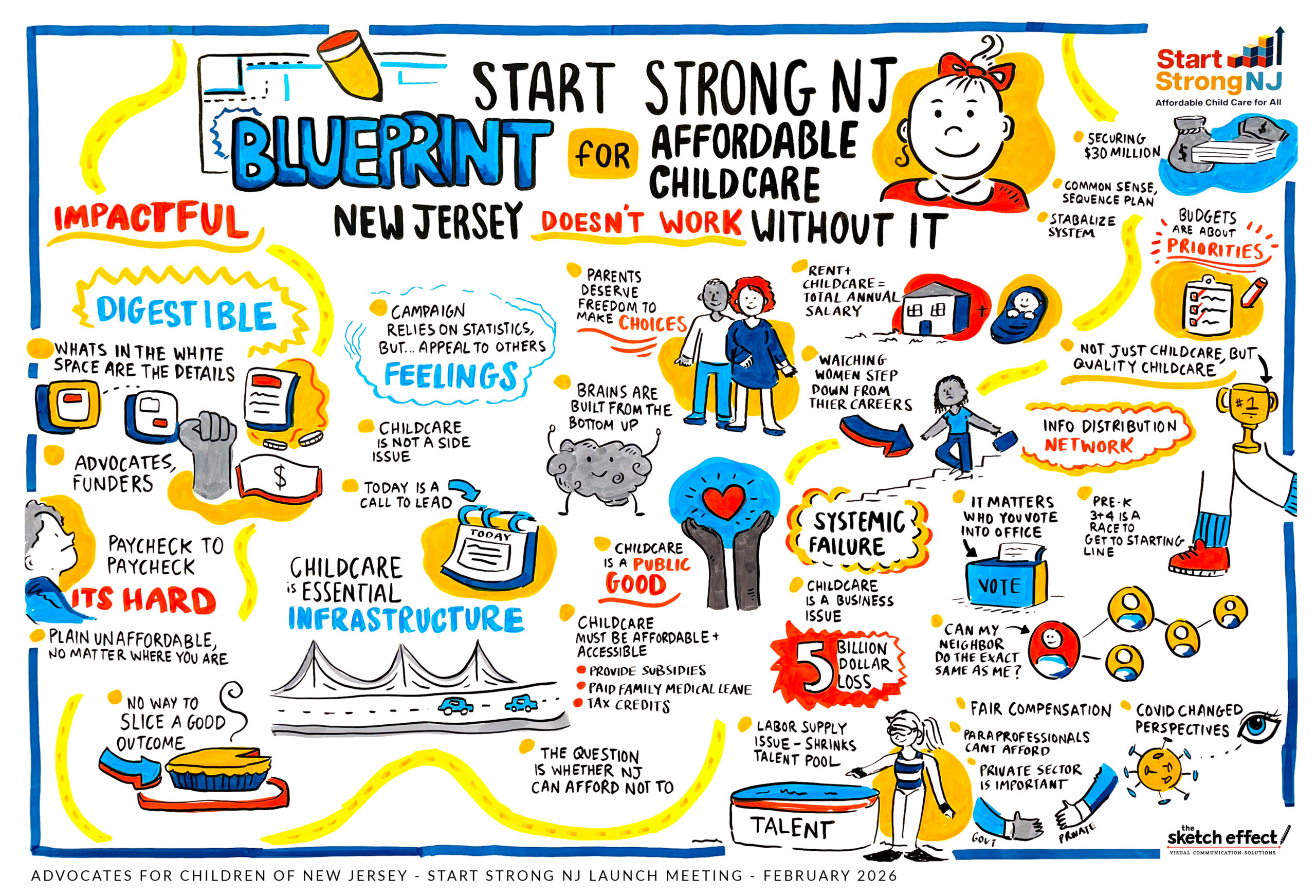
Underinvestment has left the state’s Child Care Assistance Program unable to reliably provide child care subsidies for all eligible families. This led to enrollment freezes that cause financial hardship to parents and child care providers. At the same time, child care is unaffordable for many working families who don’t qualify for assistance but whose incomes aren’t sufficient to absorb rising tuition costs.
Meanwhile, early childhood educators – the backbone of the system – are paid wages too low to sustain a stable workforce, contributing to persistent shortages and high turnover. Combined, these pressures reveal a financing model that is fragmented, unpredictable, and insufficient for a sector that functions as essential economic infrastructure.
“We can’t build a competitive economy on an unstable child care system,” said Start Strong NJ Co-chair Winifred Smith-Jenkins, Director of Early Childhood Policy and Advocacy at Advocates for Children of New Jersey. “Child care is the workforce behind the workforce. Until we fund it with the same seriousness we apply to transportation, utilities, and schools, New Jersey will continue to leave families, businesses, and children behind.”